
SKF & Timken Machine Tool Spindle Bearings: Cross-Reference Wholesale Supplier
Same model number does not mean same spindle performance. A bearing stamped with an identical designation from a different brand can still destroy your spindle if contact angle, preload class, and cage material are not matched line by line.
When sourcing SKF or Timken spindle bearings for machine tool replacement, buyers must verify authorized distribution channels, cross-reference contact angle and preload specifications, and confirm country-of-origin documentation before installation. Skipping any of these steps invites high-speed vibration, premature cage failure, and mid-six-figure financial loss from scrapped parts and freight.
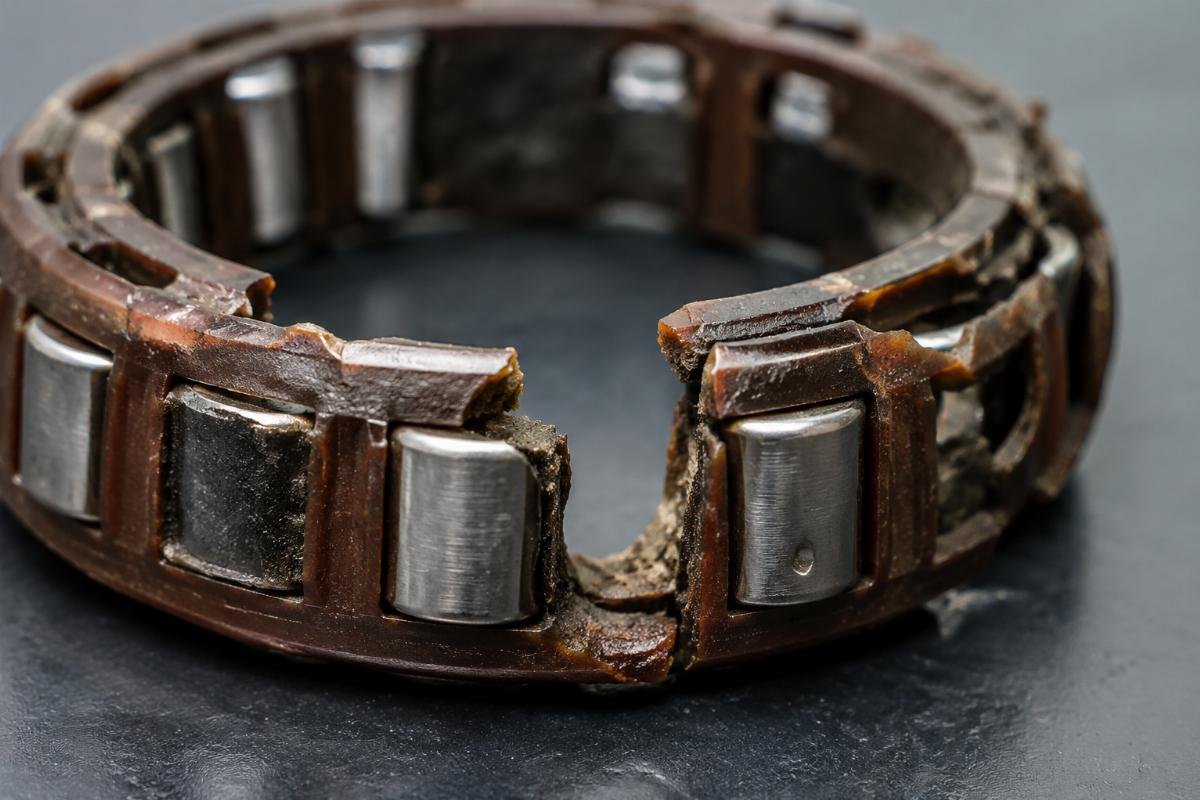
I still remember a Turkish client who ran a CNC spindle rebuild. The drawing called for a specific angular contact bearing, and he asked whether a Timken equivalent could substitute. I pulled a cross-reference number from memory, quoted it, and shipped. He installed the set, ran the spindle to rated speed, and the vibration alarm tripped within minutes. The entire batch came back. Freight, customs re-export, teardown labor, and the idle machine cost him a mid-six-figure loss, and the delay stretched well over a month. That single shipment taught me to treat every cross-reference as a fresh engineering review, not a catalog lookup. [NEED_CITE: angular contact bearing preload classes and their effect on spindle vibration per ISO 15]
From that point on, I stopped trusting model numbers alone. Every cross-reference request now goes through a structured spec alignment before a single box leaves the warehouse.
Why Can’t You Just Swap SKF and Timken Spindle Bearings?
Identical bore and outer diameter do not guarantee identical spindle behavior. The internal geometry that determines rigidity, thermal growth, and high-speed limit varies between brands and even between series within the same brand.
Spindle bearings differ along several hidden dimensions that never appear on a basic order form:
| Parameter | SKF Typical Range | Timken Typical Range | Impact if Mismatched |
|---|---|---|---|
| Contact angle | 15° / 25° / 40° options | 15° / 25° / 40° options | Wrong angle shifts axial load capacity and stiffness curve |
| Preload class | Light / Medium / Heavy | Light / Medium / Heavy | Over-preload causes thermal runaway; under-preload causes chatter |
| Cage material | Phenolic / Brass / Steel | Phenolic / Brass / Steel | Wrong cage fails at high DN value |
| Internal clearance | C2 / C3 / C4 | C2 / C3 / C4 | Incorrect clearance changes running temperature |
| Raceway curvature | Brand-specific design | Brand-specific design | Affects oil film thickness and fatigue life |
[NEED_CITE: ISO 492 rolling bearing tolerances and their effect on spindle running accuracy]
A maintenance team at a Middle East automotive parts plant once replaced a worn spindle set with bearings sourced from a non-authorized channel. The model number matched perfectly. The contact angle, however, was 25° instead of the required 15° specified by the machine builder. At low speed the spindle seemed fine. At full cutting speed, the tool marks on the workpiece became visible to the naked eye, and the bearing temperature climbed until the grease carbonized. The root cause was not the bearing brand but the unverified contact angle inside a correctly labeled box.
The lesson is simple: a cross-reference is not a model number swap. It is a parameter-by-parameter engineering confirmation. [NEED_CITE: ABMA standard guidance on angular contact bearing selection for machine tool spindles]
How to Verify Authorized SKF/Timken Distributors Globally?
Authorization is the single most reliable filter against counterfeit spindle bearings. High-fake channels now produce QR codes that scan to cloned verification pages, so a passing scan alone is no longer sufficient.
The verification process I use for every bulk order follows three layers:
- Brand official distributor list check. Both SKF and Timken publish authorized distributor directories on their regional websites. The company name on the invoice must appear exactly as listed, including the legal entity suffix.
- Country-of-origin document cross-check. The certificate of origin must match the manufacturing plant declared by the brand for that bearing series. A mismatch between the declared origin and the brand’s known production footprint is an immediate red flag.
- Physical marking inspection. Genuine bearings carry laser-etched logos with consistent font depth, batch codes that align with the brand’s internal traceability format, and packaging with security features that counterfeiters rarely replicate at scale.
[NEED_CITE: counterfeit bearing industry reports on QR code cloning and verification page spoofing]
A distributor in the Gulf region once brought me a batch of angular contact bearings he had purchased at a price noticeably below market. The boxes looked correct, the QR codes scanned to what appeared to be a valid verification page, and the paperwork included a certificate of origin. When I opened three random boxes, the laser etching on the inner ring was shallow and slightly blurred under magnification. The cage material felt lighter than standard phenolic. We sent samples to the brand’s regional technical office, and the confirmation came back within days: the batch was not in their production records. The entire lot was intercepted before any of it reached end users.
[NEED_CITE: EBR anti-counterfeit guidance on physical marking inspection for rolling bearings]
Never rely on a single verification method. The combination of authorized-list confirmation, origin document alignment, and physical marking inspection is what separates a safe purchase from a gamble.

What Specs Must Match When Cross-Referencing Bearing Brands?
A proper cross-reference aligns every functional parameter, not just the bore and outside diameter. Skipping internal specs is the most common cause of post-installation spindle failure in cross-brand substitution.
The structured cross-reference workflow I follow for every request includes the following steps:
- Confirm the original bearing’s full designation, including suffix codes. Suffix letters define contact angle, cage type, preload, and lubrication. Ignoring them is equivalent to ordering blind.
- Map the contact angle. For angular contact spindle bearings, 15° is typical for high-speed, low-load applications; 25° balances speed and rigidity; 40° is reserved for heavy axial load. The replacement must match exactly.
- Match the preload class. Light, medium, and heavy preload produce fundamentally different stiffness-temperature curves. A medium-preload bearing installed in a light-preload pair will overheat and fail.
- Verify the cage material and design. Phenolic cages are standard for high-speed spindle use due to low mass and good oil retention. Brass or steel cages serve different load and temperature profiles. Substituting cage material without review risks cage fracture at high DN.
- Confirm internal clearance class. C2, C3, and C4 clearances affect operating temperature and preload retention. The replacement must match the original specification or be explicitly approved by the machine builder.
- Validate against the actual operating condition. Speed, load direction, lubrication method, and ambient temperature all influence whether a cross-referenced bearing will perform.
[NEED_CITE: ISO 15 rolling bearing radial and axial load capacity calculation methods]
An Asian equipment repair shop once needed to replace a set of tapered roller bearings on a heavy-duty gearbox urgently. The original Timken designation was not in stock locally. Using the cross-reference table, I identified an equivalent from another major brand, confirmed the internal clearance matched the C3 requirement, and verified that the roller profile and cage design were compatible with the existing housing. The replacement was installed within days, and the gearbox returned to full load without issue. The key was not finding a similar number but confirming every internal parameter against the operating condition.
Where to Buy Genuine SKF/Timken Bearings Without Counterfeit Risk?
The safest purchasing channel is a supplier that combines authorized sourcing, full cross-reference technical support, and transparent origin documentation into a single order process.
When I work with maintenance teams and distributors across multiple regions, the pattern is consistent: buyers who treat price as the only criterion end up paying far more in downtime, freight, and scrapped assemblies. Buyers who treat verification and technical alignment as non-negotiable parts of the order process almost never face installation failures.
Our approach to every spindle bearing order includes:
- Full cross-reference support across SKF, Timken, NSK, FAG, NTN, and KOYO. Every request is checked against the original specification, including contact angle, preload, cage, and clearance, before a quotation is issued.
- Authorized channel verification. We source through traceable distribution channels and provide origin documentation with every shipment.
- Anti-counterfeit guidance at the point of delivery. Each order is accompanied by inspection notes covering physical marking, packaging security features, and batch traceability, so the receiving team can confirm authenticity before installation.
- Application-based technical review. If the operating condition suggests that the original specification may not be optimal, we flag the discrepancy and request confirmation from the machine builder or maintenance engineer before proceeding.
[NEED_CITE: industry best practices for bearing procurement authenticity verification in industrial maintenance]
A European machine tool rebuild facility once needed to source a mixed set of angular contact and cylindrical roller bearings for a spindle overhaul. The original drawings specified bearings from two different brands. Rather than placing two separate orders through unknown channels, they consolidated the request through a single sourcing process that included cross-reference verification, origin confirmation, and pre-shipment inspection. The entire set arrived with matching documentation, and the spindle passed the high-speed run-in test on the first attempt.

Conclusion
Spindle bearing substitution is an engineering task, not a catalog exercise. Matching model numbers without verifying contact angle, preload, cage, and clearance invites vibration, overheating, and costly teardown. Purchasing through authorized channels, cross-referencing every internal parameter, and confirming origin documentation are the three non-negotiable steps that separate a reliable spindle rebuild from an expensive lesson.
Leave a Reply