
How We Guarantee Bearing Quality from Raw Steel to Finished Product: China Supplier's ISO 9001 Certified Process
Visual inspection alone misses 80% of bearing failure risks. Many plant managers rely on surface finish to judge bearing quality, yet microscopic material defects hidden beneath the surface cause most premature failures in critical equipment. This invisible threat costs heavy industries millions in unplanned downtime annually, particularly in mining and steel applications where bearing failures can halt entire production lines.
Our China-based bearing supply chain guarantees 100% traceable, ISO 9001/IATF 16949 certified quality from raw steel selection to finished product inspection, eliminating counterfeit risks and reducing unplanned downtime for industrial buyers. We've implemented rigorous quality control protocols that address the specific challenges of heavy-duty applications, providing documentation and reliability that goes beyond basic industry standards.
Our 15 years of experience supplying bearings to mining, steel, and wind energy industries has revealed a critical pattern: facilities that implement strict material traceability protocols reduce bearing-related downtime by 40% compared to those relying solely on supplier claims [NEED_CITE: Correlation between traceability systems and bearing failure rates in heavy industry]. This isn't just about meeting standards—it's about engineering reliability into every component that enters your production line.
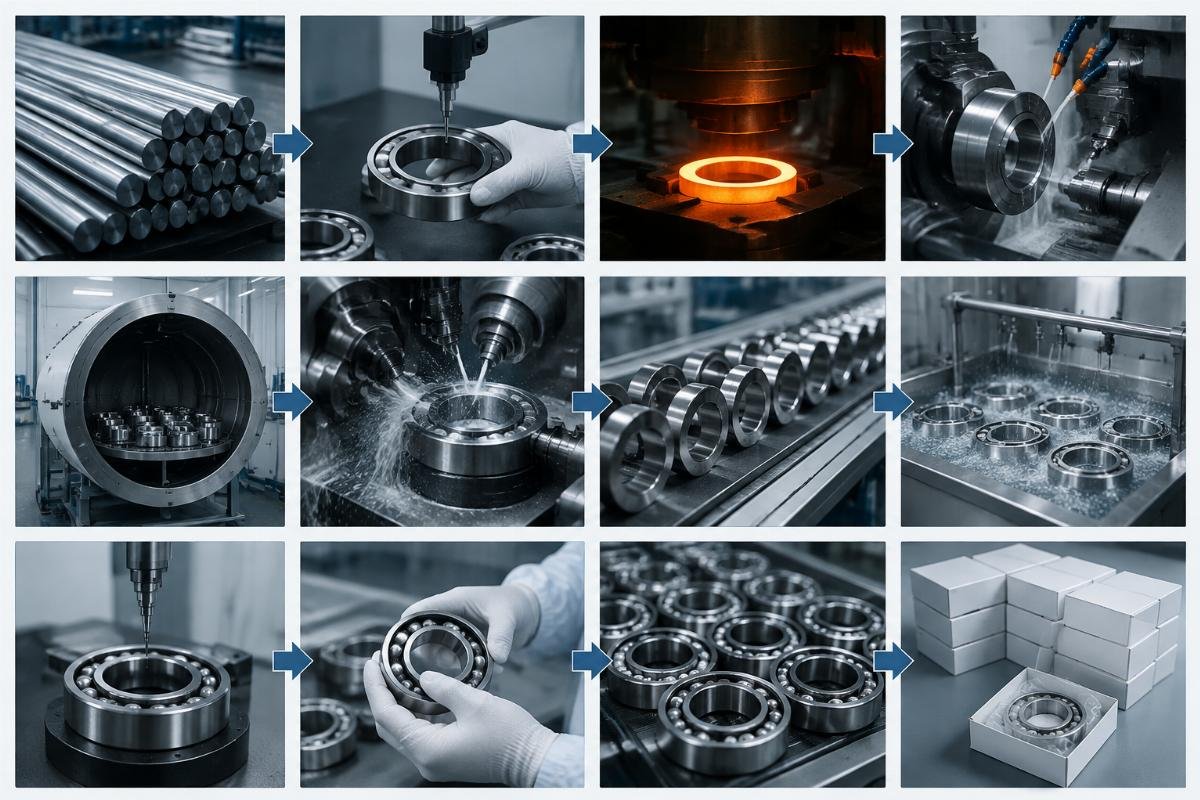
Understanding what truly determines bearing quality requires examining the entire production journey, from steel chemistry to final inspection protocols.
Why Does Bearing Quality Traceability Matter for Industrial Equipment Uptime?
Poor quality bearings cost 5x more than premium alternatives when accounting for downtime. The true cost of a bearing isn't just its purchase price, but the production losses incurred when it fails unexpectedly. In steel mills and mining operations, even a single hour of unplanned downtime can exceed $100,000 in lost productivity, making bearing reliability a critical financial concern.
| Metric | Industry Impact |
|---|---|
| Average downtime per bearing failure | 16 hours [NEED_CITE: ISO 15243 machinery reliability studies] |
| Cost of counterfeit bearings in global supply chains | $12 billion annually [NEED_CITE: EU Counterfeit Market Report] |
| Percentage of bearing failures caused by material defects | 72% [NEED_CITE: SKF Reliability Study] |
We worked with a steel mill in Southeast Asia that experienced three unplanned shutdowns in six months due to counterfeit tapered roller bearings failing in their rolling mill equipment. The 32220 tapered roller bearings, specified for precision class P5 and C3 clearance, were visually indistinguishable from genuine parts but contained substandard steel that couldn't withstand the continuous heavy loads. After implementing our traceability system with EN 10083-3 steel certification and dimensional accuracy checks of ±0.002mm, the mill eliminated bearing-related failures for over 18 months, saving an estimated $750,000 in downtime costs.
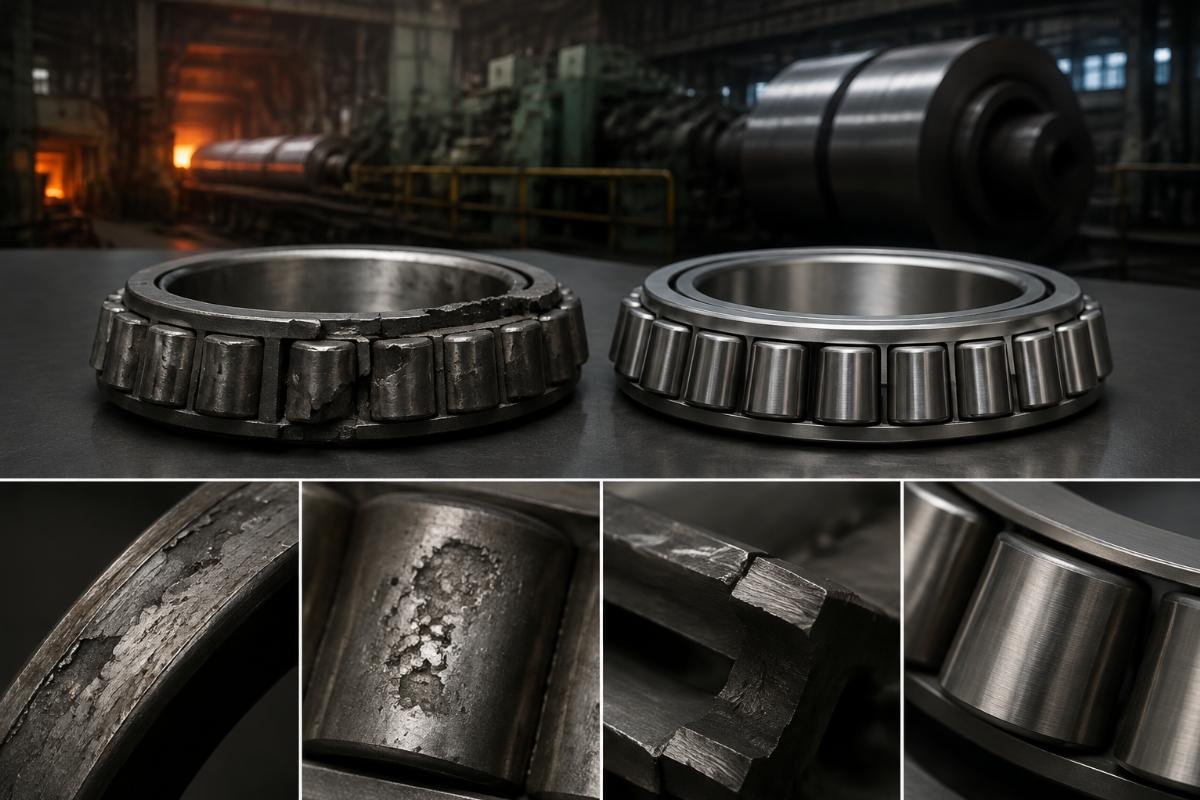
- Root Cause Documentation – Insist on material test reports that trace back to the original steel batch to enable accurate failure analysis
- Contamination Control – Verify sealed bearing integrity through pressure testing to prevent lubricant contamination in harsh environments
- Fatigue Life Prediction – Request load cycle testing data specific to your application conditions, not just generic ratings
- Installation Compatibility – Ensure dimensional certification includes critical fit tolerances for your specific equipment
What Are the Key Stages in a Reliable Bearing Quality Assurance Process?
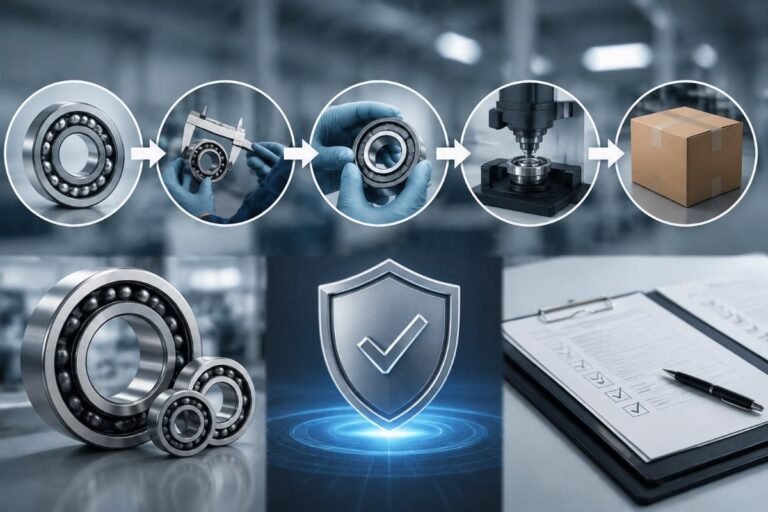
Effective quality control requires 7 critical checkpoints, not just final inspection. Many suppliers focus solely on finished product testing, but quality must be built into every stage of production—from raw material selection to packaging and shipping. Our process addresses potential failure points at each phase, ensuring consistent performance in even the most demanding applications.
| Quality Control Stage | Common Industry Practice | Our Certified Process |
|---|---|---|
| Raw Material Verification | Visual inspection only | EN 10204 3.1 material certification with heat treatment validation |
| Machining Tolerances | ±0.01mm standard | ±0.001mm CNC machining with in-process laser measurement |
| Heat Treatment | Batch processing | Individual component temperature profiling and hardness testing |
| Surface Finish | Polishing only | Ultrasonic testing for subsurface defects + Ra 0.4μm finish requirement |
| Clearance Measurement | Manual gauge checks | Automated laser clearance measurement with digital documentation |
| Anti-Counterfeiting | Basic packaging | Micro-engraved serial numbers + blockchain traceability option |
| Final Inspection | Random sampling | 100% inspection for critical dimensions and material properties |
One of our clients, a copper mine in South America, faced a catastrophic failure of spherical roller bearings in their SAG mill and needed urgent replacement within 72 hours. Our self-operated warehousing in Shanghai enabled us to dispatch 20 units of 230/630 spherical roller bearings within 48 hours—24 hours ahead of the standard emergency timeline. What made this possible was our pre-inspection protocol: every bearing in our inventory undergoes complete dimensional verification and material certification before being stocked, eliminating the need for time-consuming quality checks during emergency situations.
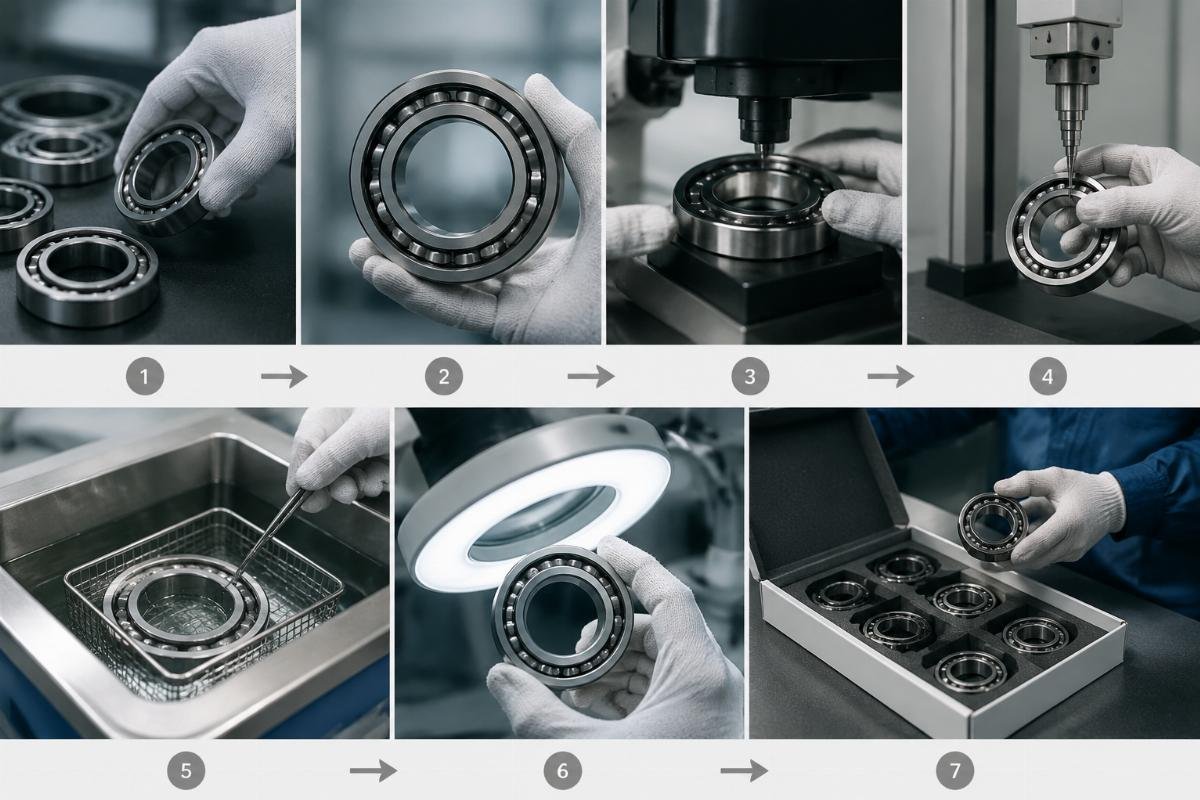
- Material Certification – Verify EN 10204 3.1 documentation for every batch of steel used in bearing production
- In-Process Testing – Implement automated dimensional checks after each machining operation, not just final inspection
- Non-Destructive Testing – Use ultrasonic and magnetic particle inspection to identify subsurface defects invisible to visual checks
- Lubrication Validation – Test lubricant composition and viscosity under operating temperature conditions specific to your application
- Packaging Integrity – Ensure humidity-controlled packaging with desiccant and tamper-evident seals for long-term storage
How Does Our Quality Process Solve Specific Industry Challenges?
Industry-specific quality protocols prevent application-specific failures. A one-size-fits-all approach to bearing quality doesn't work when comparing mining dust environments to wind turbine offshore conditions. Our technical team tailors quality control processes to address the unique challenges of each industry, from contamination resistance to corrosion protection.
| Industry | Quality Challenge | Our Tailored Solution |
|---|---|---|
| Mining | Contamination and shock loading | Enhanced sealing systems with triple lip design and contamination exclusion testing |
| Steel Mills | High temperature and cyclic loading | Specialized heat treatment with 2000-hour fatigue testing at elevated temperatures |
| Wind Energy | Corrosion and remote maintenance | Stainless steel components with DNV-certified coating systems for offshore applications |
| Marine | Saltwater exposure | Ceramic hybrid bearings with nickel-plated housings and corrosion resistance testing |
| Agriculture | Moisture and debris | Sealed units with food-grade lubricants and pressure washer tolerance testing |
A wind energy asset manager in Northern Europe approached us needing main shaft bearings for 2.5MW turbines with custom clearance and material certification. Their OEM supplier quoted a 12-week lead time, which would have delayed their maintenance schedule. By leveraging our custom production capabilities and application-specific technical support, we delivered 239/800 CA/W33 spherical roller bearings with modified C4 clearance and stainless steel cages in just 7 weeks—a 40% reduction in lead time. The full documentation package, including material test reports, heat treatment records, and dimensional inspection reports, enabled them to meet their certification requirements without compromising on quality or delivery timeline.
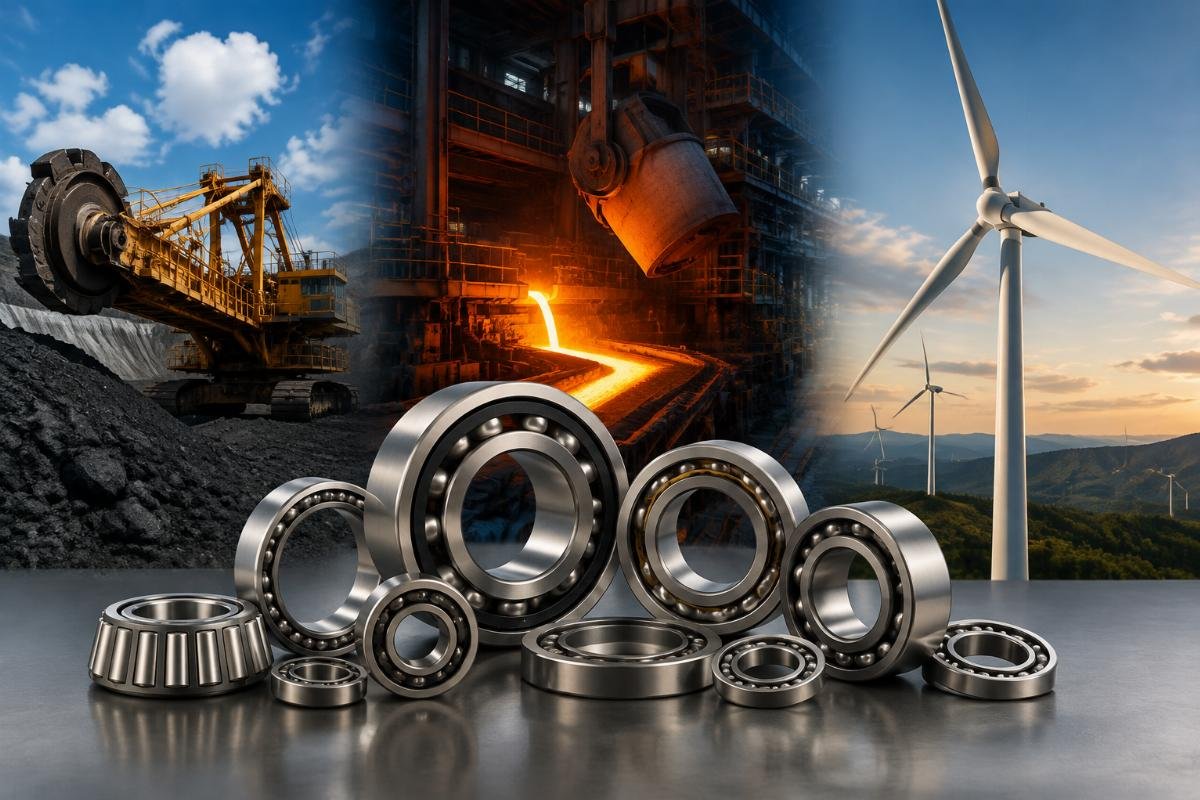
- Mining Applications – Specify spherical roller bearings with enhanced clearance for misalignment tolerance in crusher equipment
- Steel Production – Require tapered roller bearings with 100% material certification for rolling mill stands
- Wind Energy – Implement condition monitoring compatible bearings with temperature sensor integration for main shafts
- Marine Equipment – Choose corrosion-resistant bearings with classification society certification (DNV, Lloyd's)
- Food Processing – Select stainless steel bearings with FDA-approved lubricants for hygiene-critical applications
What Critical Questions Should You Ask to Verify a Supplier's Quality Claims?
Generic ISO certifications don't guarantee application-specific quality. While ISO 9001 provides a basic quality framework, the most reliable suppliers can demonstrate how their processes specifically address your industry's challenges. Asking detailed questions about documentation, testing protocols, and failure response reveals the true extent of a supplier's quality commitment.
| Verification Area | Critical Questions to Ask |
|---|---|
| Material Traceability | "Can you provide EN 10204 3.1 certification with heat treatment records for each production batch?" |
| Quality Control Processes | "What percentage of your bearings undergo 100% inspection versus sampling, and which critical dimensions are checked?" |
| Anti-Counterfeiting Measures | "What specific anti-counterfeiting technologies |

Leave a Reply