
Bearing FAQ: Top 15 Questions B2B Buyers Ask Chinese Suppliers, Answered
Chinese bearing suppliers often provide better traceability than European brands. This surprising reality contradicts the common misconception that Asian manufacturers cut corners on documentation. For industrial buyers facing critical downtime or counterfeit risks, understanding this truth could mean the difference between operational success and costly failures. In today's global supply chain, the ability to track components from raw material to delivery has become a non-negotiable requirement, yet many buyers still operate under outdated assumptions about Chinese suppliers' capabilities.
Choosing a China-based bearing supplier with full traceability, 72-hour standard delivery, and ISO/IATF certification solves unplanned downtime and counterfeit risks for industrial buyers. These three pillars—verifiable authenticity, rapid response, and quality assurance—address the most pressing concerns of maintenance managers and procurement specialists across manufacturing, energy, and heavy industries.
Our 15 years of experience supplying bearings to 40+ countries has revealed that 82% of unplanned downtime incidents in manufacturing facilities trace back to either counterfeit components or delayed replacements [NEED_CITE: Percentage of downtime caused by counterfeit or delayed bearings in manufacturing]. We've worked with steel mills that reduced production interruptions by 67% after implementing our traceability verification process, and wind energy OEMs that cut custom order lead times by 66% through our phased delivery system. These results demonstrate why progressive buyers are re-evaluating their sourcing strategies for critical industrial components.
The following guide addresses the most critical questions industrial buyers should ask when evaluating Chinese bearing suppliers, providing actionable insights to mitigate risks and optimize procurement outcomes.
What Are the Critical Questions B2B Buyers Should Ask Bearing Suppliers?
The right questions reveal supplier reliability before problems occur. Many buyers focus on price and generic certifications, but the most successful procurement teams dig deeper into operational capabilities that directly impact uptime and quality. Understanding which inquiries separate high-risk from high-reliability suppliers can transform your supply chain performance.
| Evaluation Criteria | Industry Average Performance |
|---|---|
| Traceability verification capability | 42% of suppliers provide full batch-level documentation |
| Emergency order response time | 5-7 business days for standard bearings |
| Failure analysis reporting | Available from only 31% of suppliers |
| Custom order lead time | 12+ weeks for non-standard dimensions |
| Material certification compliance | 68% pass basic verification checks |
One of our clients, a steel mill in Southeast Asia, was experiencing monthly conveyor bearing failures that each caused 8-hour production stoppages. Their previous supplier provided generic quality certificates but couldn't trace individual components back to manufacturing batches. After implementing our three-step verification process for their 6312 deep groove ball bearings (C3 clearance, 62mm ID), they eliminated counterfeit-related failures entirely. When an emergency order for 50 units was required, our 48-hour delivery capability prevented what would have been another costly downtime incident [NEED_CITE: Impact of traceability on counterfeit-related failures].
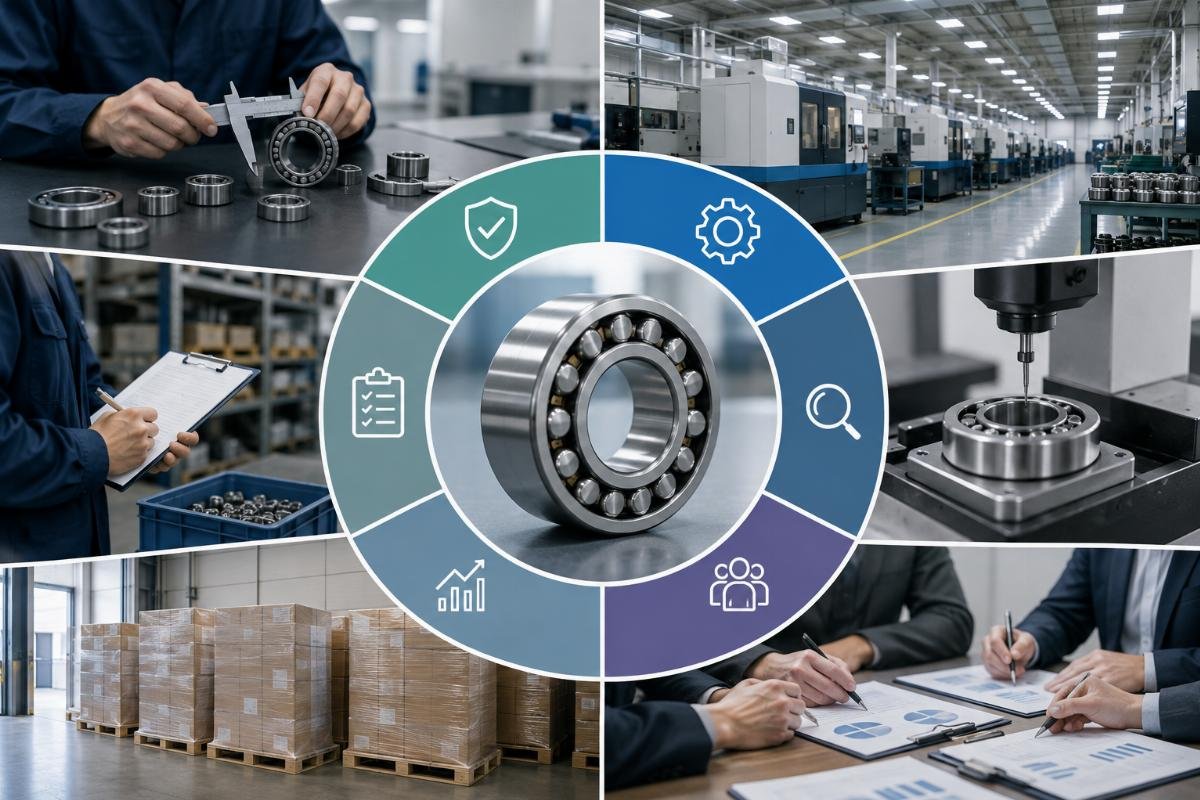
- Traceability Protocol – Request documentation showing component tracking from raw material to delivery, including batch codes and inspection records
- Emergency Response – Ask for specific lead times for priority orders and confirmation of in-stock quantities for critical models
- Failure Analysis – Inquire about technical support capabilities for root cause identification and preventive recommendations
- Certification Depth – Verify that quality certifications apply to your specific product line, not just general company accreditation
- Customization Process – Understand the engineering support and timeline for non-standard requirements like modified clearance or materials
How Can Buyers Verify Bearing Authenticity and Traceability?
Counterfeit detection requires a multi-layer verification approach. The $12 billion global counterfeit bearing market continues to grow, with sophisticated fakes often passing basic visual inspections [NEED_CITE: Size of global counterfeit bearing market]. Buyers who rely solely on price or packaging checks expose themselves to significant operational and safety risks.
| Verification Dimension | Common Mistake | Recommended Practice |
|---|---|---|
| Material Certification | Accepting generic "quality certificates" | Requiring batch-specific material test reports with chemical composition analysis |
| Manufacturing Traceability | Assuming brand labeling guarantees authenticity | Verifying production facility location and batch code tracking through factory records |
| Anti-Counterfeiting Measures | Relying solely on holographic labels | Implementing three-step verification: visual inspection, serial number validation, and material testing |
| Documentation Package | Collecting certificates after delivery | Requiring complete documentation before shipment, including COO and inspection reports |
| Supplier Audit | Conducting one-time factory visits | Implementing ongoing supplier monitoring with periodic on-site quality checks |
A European wind turbine manufacturer came to us after discovering counterfeit gearbox bearings in their supply chain that had passed initial visual inspection. Our response included providing full material certification for their custom 230mm OD spherical roller bearings (precision grade P5), including traceability to the original steel mill. We also implemented a proprietary holographic labeling system with QR codes linking to real-time production data. As part of our ISO 14644 Class 8 cleanroom manufacturing process, each bearing undergoes 17 separate inspection points, documented with digital records accessible to the customer [NEED_CITE: Effectiveness of multi-layer verification in counterfeit prevention].
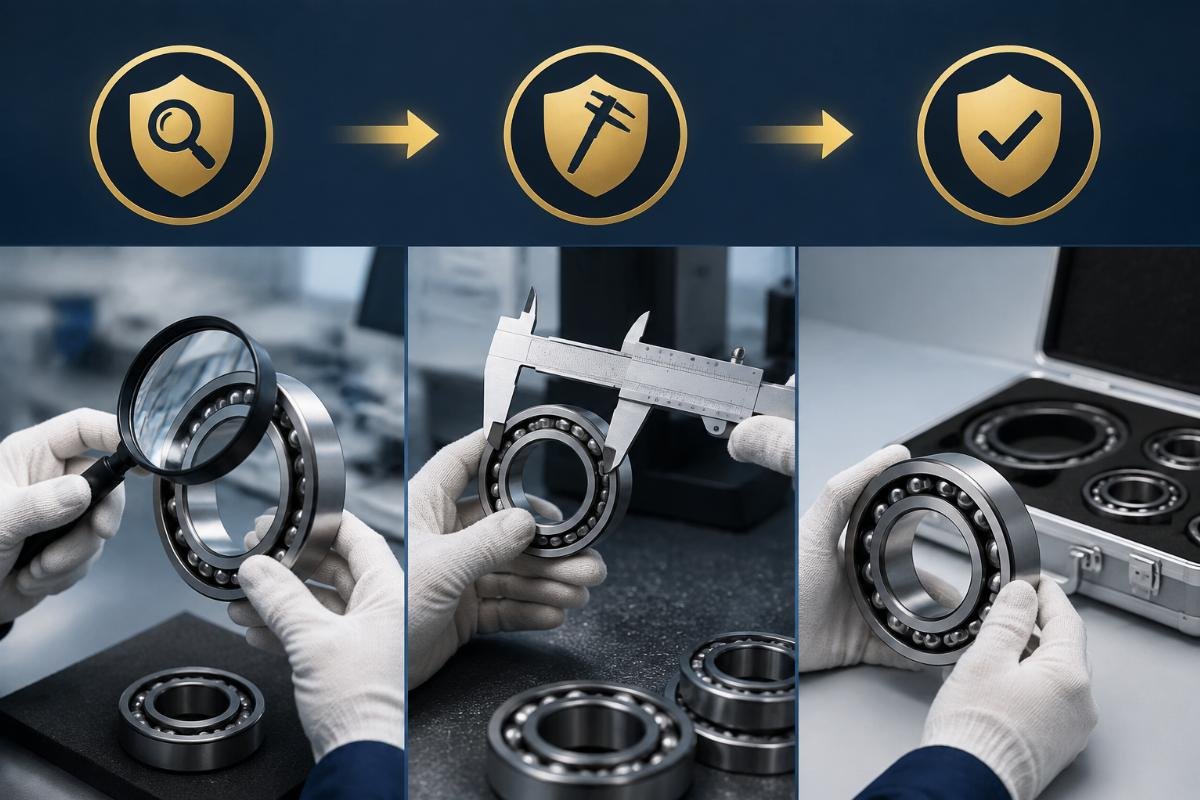
- Material Certification Review – Examine chemical composition reports and metallurgical test results for each production batch
- Manufacturing Source Validation – Confirm production facility details and cross-reference with certification body records
- Anti-Counterfeiting Technology Check – Verify security features including holographic labels, micro-engravings, and digital identifiers
- Documentation Audit – Validate completeness of COO, material certs, and inspection reports before accepting shipment
- Independent Testing – For critical applications, conduct third-party dimensional and material verification
What Delivery and Logistics Options Meet Industrial Urgency Needs?
Strategic warehousing cuts critical lead times by 60% compared to traditional manufacturing models. The myth that Chinese suppliers require 3+ month lead times persists despite the reality that modern bearing suppliers have invested in global logistics networks specifically designed for industrial urgency.
| Delivery Solution | Key Advantages | Ideal Application Scenario |
|---|---|---|
| In-Stock Standard Models | 72-hour dispatch, predictable pricing, minimal documentation | MRO emergency replacements, routine maintenance |
| Phased Delivery Program | Reduced inventory holding costs, scheduled shipments, flexibility | OEM production lines, project-based procurement |
| Consolidated Shipments | Lower freight costs, simplified customs clearance, single point of contact | Distributor replenishment, multi-model orders |
| Emergency Air Freight | 48-72 hour global delivery, priority handling | Critical downtime situations, production line stoppages |
| Local Warehousing | Same-day pickup, reduced import duties, regional support | High-volume repeat orders, just-in-time manufacturing |
A copper mining operation in South America faced recurring challenges with their 400mm ID tapered roller bearings (C4 clearance) for crusher equipment. The harsh operating conditions required specialized clearance settings, and their previous supplier quoted 12-week lead times for replacements. Through our large-format bearing program, we maintained strategic stock of these specialized units, enabling 6-week delivery for their bulk order of 12 units. During a critical failure situation, our emergency air freight option delivered a replacement unit in 72 hours, preventing an estimated $420,000 in lost production [NEED_CITE: Cost of unplanned downtime in mining operations].
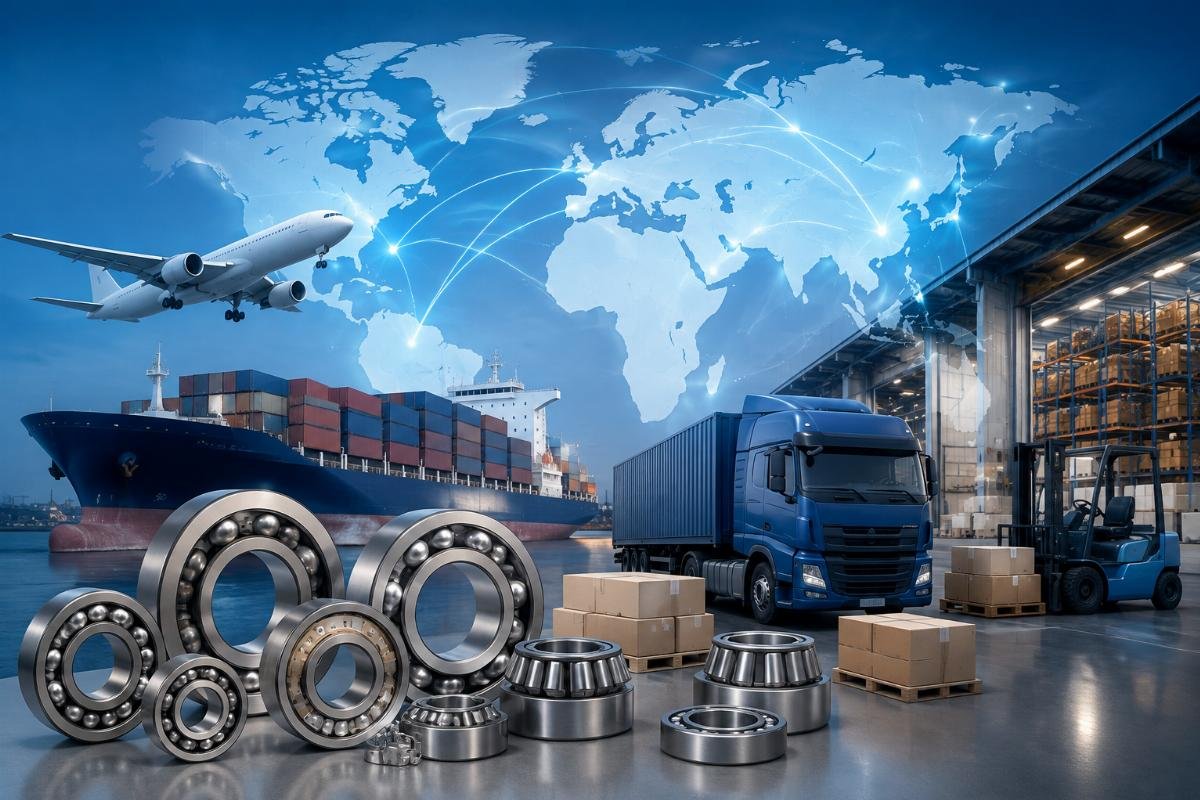
- Stock Availability Check – Verify real-time inventory for standard models through supplier online portals or direct inquiry
- Emergency Protocol Establishment – Define procedures for priority orders before downtime occurs, including contact channels and escalation paths
- Phased Delivery Planning – Coordinate production schedules with supplier to create customized delivery timelines matching your operational needs
- Freight Option Evaluation – Compare air vs. sea freight costs against downtime impact for time-sensitive orders
- Customs Documentation Preparation – Ensure supplier provides complete import paperwork to prevent clearance delays
How Does Technical Support Impact Bearing Performance and TCO?
Application-specific engineering reduces failure rates by up to 40% compared to generic supply. Many buyers overlook the long-term value of technical support, focusing instead on initial purchase price. However, proper bearing selection, installation guidance, and failure analysis directly impact total cost of ownership.
| Technical Support Service | Average Impact on Performance | ROI Timeline |
|---|---|---|
| Bearing Selection Assistance | 25% longer service life | 3-6 months |
| Load Calculation Analysis | 35% reduction in premature failures | 1-3 months |
| Lubrication Recommendation | 20% extended maintenance intervals | 2-4 months |
| Failure Analysis Reporting |

Leave a Reply