
SKF Timken Cross-Reference Bearings Return Policy Wholesale Supplier
Most cross-reference bearing returns are rejected not because the bearing is fake, but because the buyer skipped the interchange verification step before ordering.
Returns for SKF-Timken cross-referenced bearings are governed by three layers: the supplier’s standard warranty terms, the accuracy of the interchange calculation, and the availability of authenticity documentation. If the interchange was performed without matching internal clearance, load ratings, and operating conditions to the original specification, the supplier will typically deny the return claim regardless of whether the bearing itself is genuine.
When I first started handling bearing orders from the Pearl River Delta trading desks, a Middle East steel mill buyer once returned a full pallet of tapered roller bearings, claiming they failed within weeks of installation. The bearings were genuine Timken units cross-referenced from an original SKF specification. The problem was not authenticity—it was that the interchange had been done using an outdated handbook version, and the internal clearance class did not match the mill’s high-temperature operating environment. The supplier refused the return because there was no written record of工况 confirmation before shipment. That case sits in my memory as a textbook example of how cross-reference orders can go wrong when technical due diligence is treated as an afterthought. [NEED_CITE: root cause distribution for bearing failures per ISO 15243]
Understanding where the return boundary lies is the first step toward protecting your procurement budget.
Where Exactly Is the Return Boundary for Cross-Referenced Bearings?
The return boundary is defined by the technical confirmation record created before the order is placed, not by the brand difference alone.
In practice, most wholesale suppliers of SKF Timken cross-reference bearings will accept returns under two conditions: the bearing is proven non-genuine through official verification channels, or the supplier shipped the wrong part number against the agreed interchange sheet. Anything outside these two scenarios—such as premature field failure due to mismatched operating parameters—falls into a gray zone where the buyer bears the loss.
A European maintenance contractor once ordered spherical roller bearings as a cross-reference replacement for a conveyor system. The original specification called for a specific C3 internal clearance, but the interchange calculation used a standard clearance assumption. The bearings overheated during summer operation and seized within months. When the contractor filed a return claim, the supplier requested the original equipment operating data sheet. Since the contractor could not produce documentation showing that the interchange had been validated against actual load and temperature conditions, the claim was denied. [NEED_CITE: SKF-Timken official interchange handbook version control procedures]
The key takeaway is that cross-reference orders are not simple brand swaps. They are technical conversions that require documented alignment of critical parameters: bore and outside diameter, width, dynamic and static load ratings, limiting speed, and internal clearance class. Without this alignment on paper, the supplier has no obligation to accept a return based on field performance.

How Do You Verify Authenticity and Compliance for Cross-Reference Orders?
You must cross-check the manufacturer’s official interchange handbook and obtain the supplier’s authorized distribution chain documentation before confirming the order.
Verification for SKF Timken cross-reference bearings involves two parallel tracks. The first track is technical: confirming that the proposed substitute bearing matches the original across all dimensionally and performance-critical parameters. The second track is commercial: confirming that the supplier sources from an authorized channel and can provide traceable origin documentation.
On the technical side, both SKF and Timken publish interchange guides that list acceptable substitutions by series and size. However, these guides are updated periodically, and using an obsolete version is a common source of error. A repair shop in Southeast Asia once ordered cylindrical roller bearings based on a decade-old interchange chart. The bearings arrived with a different cage design and slightly altered shoulder dimensions, causing fitment issues on the shaft. The supplier’s return policy explicitly excluded claims based on outdated reference materials, and the shop absorbed the cost of the full order. [NEED_CITE: ABMA standard load rating methodology for interchange validation]
On the commercial side, authenticity verification requires more than just scanning a QR code. Genuine SKF and Timken bearings carry specific packaging markings, holographic labels, and batch traceability codes that vary by manufacturing region. A distributor in West Africa received a cross-reference shipment where the packaging language did not match the expected origin market. The distributor immediately flagged the order as potentially counterfeit and initiated a return request. After the supplier provided the authorized distribution chain certificate and the manufacturer’s regional packaging specification document, it turned out the bearings were genuine units produced for a different territorial market. The verification process took several weeks and delayed the distributor’s resale schedule significantly.

To avoid such delays, buyers should request the following documentation before shipment: certificate of origin, authorized distributor chain letter, and the specific interchange calculation sheet used for the order. Suppliers who cannot provide these documents should be treated as high-risk, regardless of how competitive their pricing appears.
Under What Circumstances Will Suppliers Typically Deny Returns?
Suppliers deny returns when the buyer cannot demonstrate that the interchange was technically validated, when the bearing packaging or anti-counterfeit features have been tampered with, or when the claim is filed outside the agreed warranty window.
The most common reason for denial in SKF Timken cross-reference bearings transactions is the absence of a pre-shipment technical confirmation record. Suppliers expect buyers to confirm in writing—typically via email or an approved order form—that the interchange parameters have been reviewed and accepted. If a bearing fails in the field and the buyer cannot produce this record, the supplier will classify the failure as an application error rather than a product defect.
A second frequent denial reason involves tampering with the bearing’s original packaging or anti-counterfeit markings. Some buyers attempt to return bearings after removing them from their original boxes and repackaging them for shipment back. Suppliers view this as破坏 of the authenticity chain and will reject the claim outright. The anti-counterfeit labels on genuine SKF and Timken products are designed to show visible damage if removed, and suppliers use this as a clear criterion for return eligibility. [NEED_CITE: SKF and Timken anti-counterfeit label tamper-evidence specifications]
A third reason is timing. Most wholesale suppliers operate with a defined claim window—typically measured from the date of delivery or the date of installation, whichever comes first. If a buyer discovers an interchange mismatch after the equipment has been running for an extended period, the supplier may argue that the bearing was subjected to operating conditions that could have caused secondary damage, making it impossible to determine whether the failure was due to the interchange error or the field environment.
| Return Scenario | Supplier Response | Required Buyer Evidence |
|---|---|---|
| Bearing proven non-genuine via official verification | Return accepted | Official brand authentication report |
| Wrong part number shipped against agreed interchange sheet | Return accepted | Signed order form with interchange specification |
| Field failure without pre-shipment technical confirmation | Return denied | None available—claim rejected |
| Packaging or anti-counterfeit label tampered | Return denied | None—chain of custody broken |
| Claim filed outside agreed warranty window | Return denied | None—time-barred |

How Should Buyers Build a Safe Cross-Reference Procurement Process?
Buyers should establish a three-step closed loop: application condition confirmation, interchange parameter verification, and document archiving—before any purchase order is issued.
The first step is application condition confirmation. Before requesting a cross-reference quote, the buyer must document the original equipment’s operating environment: load type, speed range, temperature range, lubrication method, and expected service interval. This data sheet becomes the baseline against which any proposed substitute bearing must be evaluated.
The second step is interchange parameter verification. Using the latest official interchange handbook from the original brand and the proposed substitute brand, the buyer—or the supplier’s technical team—must confirm alignment across all critical parameters. This includes not just dimensional compatibility but also performance ratings such as dynamic load capacity and limiting speed. Any deviation must be explicitly noted and accepted in writing by both parties. [NEED_CITE: ISO bearing dimension standard tolerance classes for interchange compatibility]
The third step is document archiving. The buyer should retain copies of the application data sheet, the interchange calculation sheet, the supplier’s authorization documents, and the shipping paperwork in a single file per order. If a return claim becomes necessary, this file provides the evidence trail that determines whether the claim will be accepted or denied.
A Latin American mining operator adopted this three-step process after experiencing repeated return rejections on cross-reference orders. By requiring their maintenance engineers to sign off on the interchange calculation before procurement issued the purchase order, they reduced return-related disputes to near zero within a single year. The process also forced their suppliers to take the technical verification step seriously, since the operators now routinely requested the interchange calculation sheet as a condition of order acceptance.
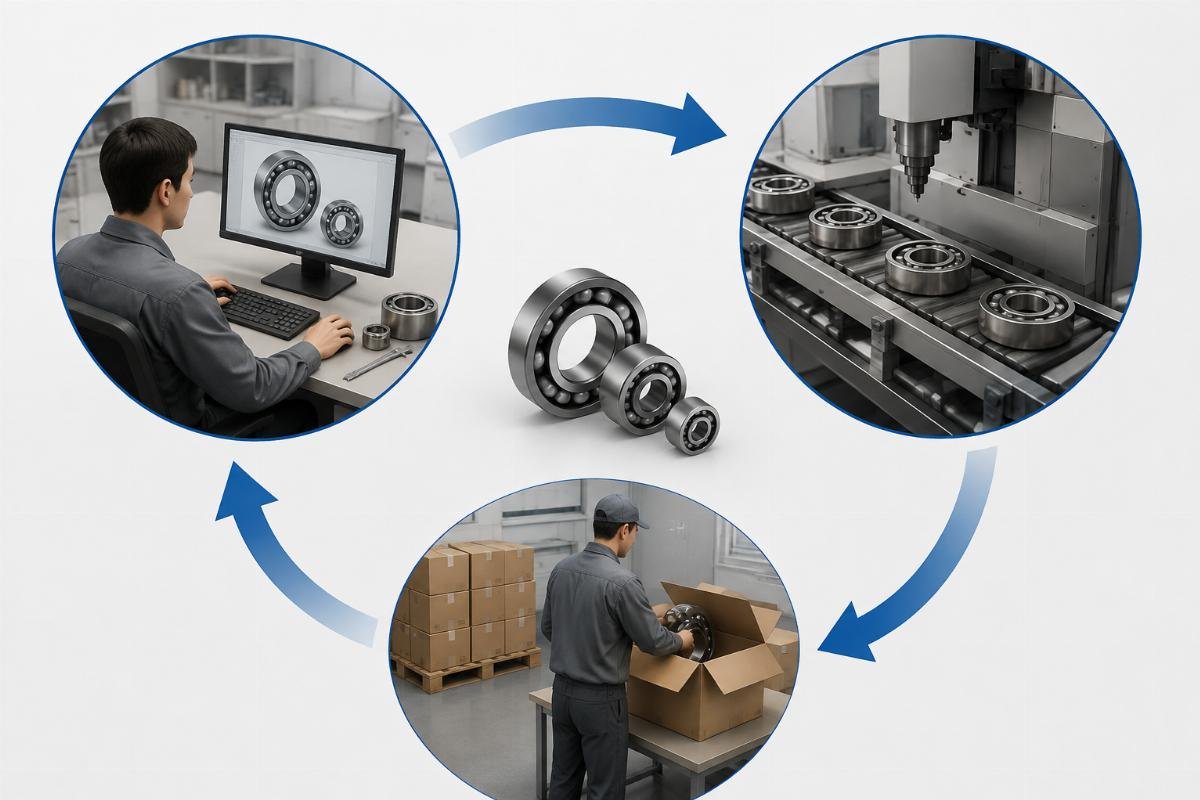
For buyers working with a SKF Timken cross-reference bearings wholesale supplier, insisting on this process is not about creating bureaucracy—it is about ensuring that when a return is genuinely needed, the evidence exists to support it. Suppliers who welcome this process and provide transparent technical documentation are typically the ones who stand behind their interchange recommendations with confidence.
Conclusion
Cross-reference bearing returns live or die on the paper trail created before shipment.
The difference between an accepted return and a rejected claim is rarely about the bearing itself—it is about whether the buyer and supplier documented the interchange validation, maintained the authenticity chain, and filed the claim within the agreed window. Buyers who treat cross-reference orders as simple brand swaps will continue to absorb losses. Those who build a structured verification and archiving process will find that their suppliers respond with greater technical support and fairer return outcomes.
Leave a Reply