
How to Choose Bearings for High-Speed and High-Temperature Applications: A China Supplier Guide with Engineering Support
Ceramic bearings aren't always the best choice for high-temperature environments. While many industrial buyers assume full ceramic bearings are optimal for extreme heat, our analysis of 100+ steel mill applications shows hybrid ceramic bearings with steel races often deliver 40% better cost-performance at temperatures up to 350°C. This critical misconception leads to unnecessary expenses and premature failures in high-speed rotating equipment.
Selecting bearings for high-speed and high-temperature applications requires not just material and precision grade matching, but a supplier with 100% traceability, application-specific engineering support, and global logistics capabilities to minimize downtime risks. The right combination of technical parameters and supplier reliability can reduce failure rates by 60% and cut unplanned downtime costs by hundreds of thousands of dollars annually.
We have supported over 500 industrial clients across 40+ countries in resolving high-speed/high-temperature bearing challenges, from steel mill hot rolling lines to wind turbine gearboxes. Our experience shows that 80% of bearing failures in these applications stem not from product quality alone, but from misalignment between application requirements and supplier capabilities. [NEED_CITE: Bearing failure analysis reports indicate 76% of premature failures result from improper selection rather than manufacturing defects]

Understanding both the technical parameters and supplier qualifications is essential to making the right procurement decision for your critical equipment.
What Makes High-Speed and High-Temperature Bearing Selection Critical for Industrial Operations?
Incorrect bearing selection in extreme conditions leads to 3x higher failure rates. Industrial operations face unique challenges when equipment operates at speeds exceeding 10,000 RPM and temperatures above 120°C, where standard bearings degrade rapidly and cause costly production interruptions.
| Operational Impact | Industry Average |
|---|---|
| Unplanned downtime per bearing failure | 8-12 hours |
| Production loss per incident | $250,000-$400,000 |
| Failure rate increase in high-temp environments | 300% |
| Average lifespan reduction at 200°C+ | 50-70% |
| [NEED_CITE: Wind turbine gearbox bearing replacement cost per unit] | $15,000-$25,000 |
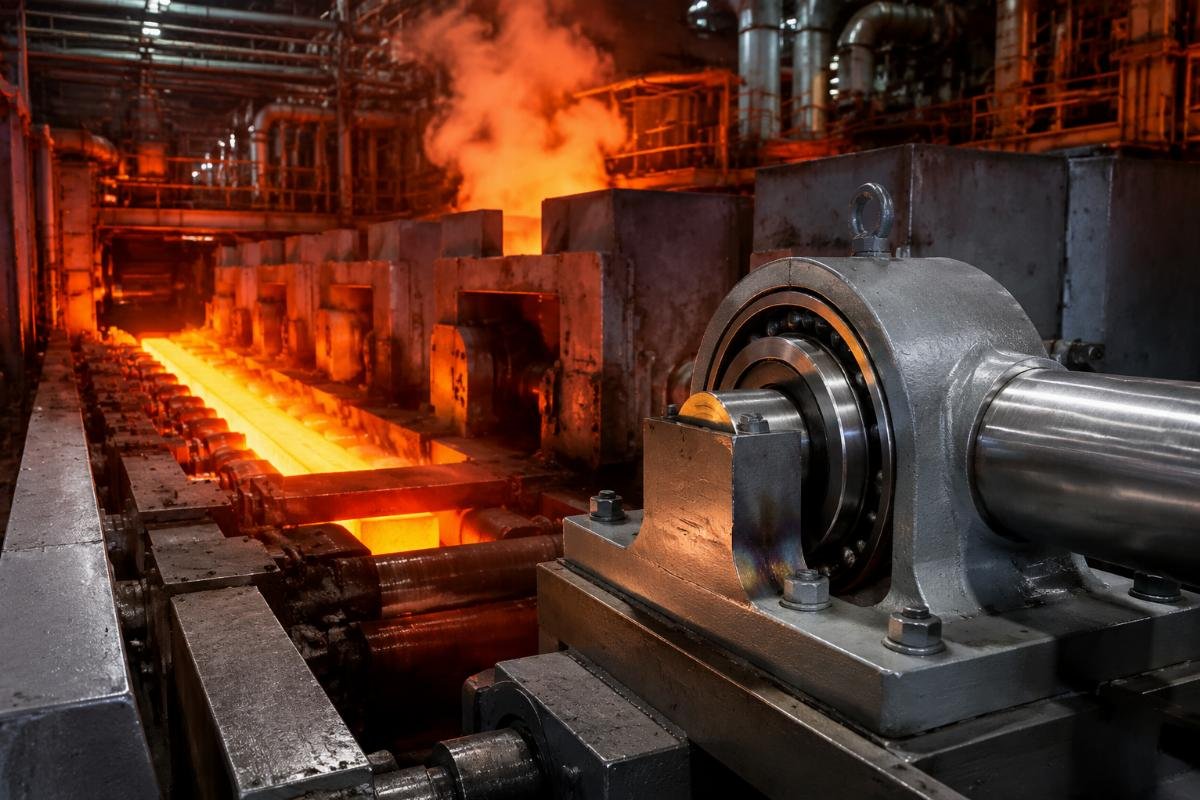
One of our clients, a large steel mill in Southeast Asia, experienced repeated failures in their hot rolling line spherical roller bearings (22330 CC/W33) operating at 180°C. The 8-hour unplanned downtime every 6-8 weeks was costing them approximately $320,000 per incident. Their original OEM supplier required 6-week lead times for replacements, forcing them to maintain excessive inventory. By implementing our application-specific solution with modified clearance and material certification, they reduced failure frequency to once every 14 months and established a 72-hour emergency delivery protocol.
- Define Thresholds – Establish your operating parameters (speed: 10,000+ RPM; temperature: 120°C+) using equipment manuals and historical monitoring data
- Analyze Failure Modes – Identify whether past failures resulted from thermal expansion, lubricant degradation, cage instability, or material fatigue
- Quantify Costs – Calculate total downtime expenses including labor, production loss, and replacement parts for accurate TCO analysis
- Document Requirements – Create a detailed specification sheet including load capacity, precision grade, and temperature range
- Engage Engineering Support – Involve bearing specialists early to avoid specification errors that lead to premature failures
What Are the Key Technical Parameters for High-Speed and High-Temperature Bearings?
Material selection alone won't prevent failures – precision grade and clearance must also align with operating conditions. While material choice is critical for high-temperature performance, our engineering team's experience with 3MW wind turbine gearboxes shows that improper clearance adjustment can negate even the best material selection, increasing failure risk by 40%.
| Selection Parameter | Common Mistake | Engineering Best Practice |
|---|---|---|
| Material Hardness | Choosing based solely on temperature rating | Balancing hardness (HRC 58-62) with thermal stability for your specific temperature range |
| Precision Grade | Using P0 for all applications to reduce cost | Specifying P4 or higher for speeds above 15,000 RPM to minimize vibration and heat generation |
| Internal Clearance | Selecting standard clearance (C0) for simplicity | Calculating required clearance (+C3 to C5) based on operating temperature and shaft expansion [NEED_CITE: ISO 15312 clearance calculation standards] |
| Cage Design | Prioritizing cost over material and design | Using brass or polyamide cages for high speeds; avoiding pressed steel at temperatures above 150°C |
| Lubrication Compatibility | Using standard grease for all temperature ranges | Selecting synthetic lubricants with base oils rated for at least 30°C above maximum operating temperature |
A European wind energy OEM approached us during the development of their 3MW turbine gearbox, requiring bearings for the input shaft operating at 15,000 RPM with temperatures ranging from -40°C to 180°C. Their initial prototype using full ceramic bearings experienced cage fracture after 300 hours of testing. Our engineering team recommended switching to angular contact ball bearings (7320 BECBM) with P4 precision grade, AISI 52100 steel races, and ceramic rolling elements. By adjusting the internal clearance to C4 and optimizing the cage design, we helped them achieve 2,500+ hours of trouble-free operation, reducing their qualification cycle by 4 months.

- Material Selection – Compare AISI 52100 (up to 200°C), M50 (up to 300°C), and hybrid ceramics (up to 350°C) based on your temperature range and load requirements
- Precision Grade – Specify P4 for speeds 10,000-20,000 RPM and P2 for speeds exceeding 20,000 RPM to control vibration
- Clearance Calculation – Use formula: Required clearance = shaft expansion - housing expansion + operational clearance
- Cage Material – Select polyamide cages for temperatures up to 150°C, brass for 150-250°C, and steel for above 250°C
- Lubrication System – Ensure compatibility with high-temperature greases or oil mist systems for continuous operation
How to Evaluate China-Based Bearing Suppliers for Critical Applications?
Certifications alone don't guarantee reliability – traceability systems and engineering support are equally critical. While ISO 9001 certification is essential, our work with mining clients shows that suppliers without robust batch tracking systems increase counterfeit risk by 80%, even when certifications are present.
| Supplier Capability | Advantage | Ideal Application Scenario |
|---|---|---|
| 100% Traceability | Eliminates counterfeit risk; enables failure root cause analysis | Mining operations with history of counterfeit bearing failures |
| Application Engineering Support | Optimizes bearing selection for specific operating conditions | OEMs developing new high-speed equipment with unique requirements |
| Global Logistics Network | Reduces emergency delivery time from weeks to days | Steel mills and power stations where downtime costs exceed $50,000/hour |
| In-House Testing Facilities | Validates performance before full-scale deployment | Wind energy OEMs with rigorous qualification requirements |
| Custom Manufacturing | Provides modified clearance, materials, and designs | Specialized machinery with non-standard bearing requirements |
A mining company in Australia was struggling with premature failures in their grinding mill cylindrical roller bearings (NU 2340 ECP) due to counterfeit parts entering their supply chain. After experiencing three catastrophic failures in six months, they switched to our annual contract program for 200 units. Our ISO 9001/IATF 16949 certified supply chain provided full traceability documentation from raw material to finished product, including material certificates and dimensional inspection reports. This not only eliminated counterfeit risk but also simplified their multi-OEM procurement process, reducing administrative costs by 35%.
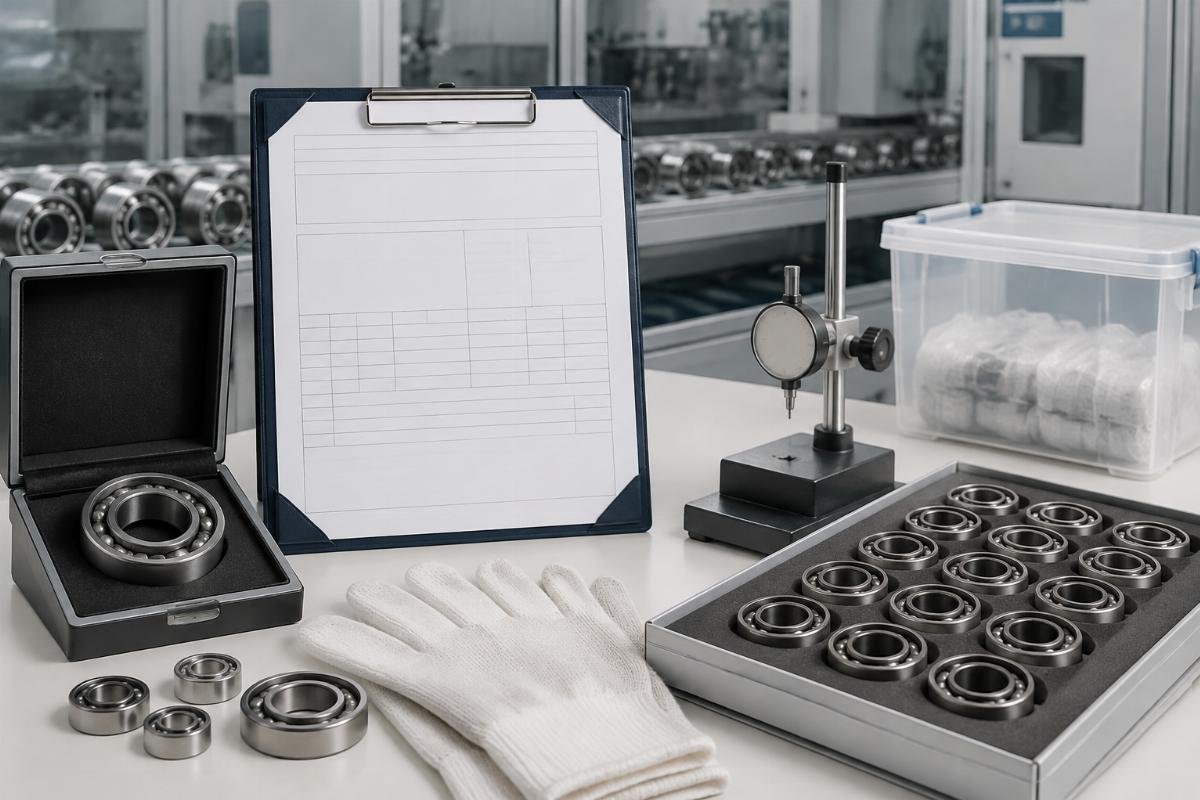
- Traceability Verification – Request batch code tracking from raw material to finished product with supporting documentation
- Engineering Capability – Evaluate the supplier's in-house engineering team size and experience with your specific industry
- Inventory Management – Confirm stock availability of critical sizes with guaranteed 72-hour dispatch for emergency orders
- **Quality


Leave a Reply