
Genuine SKF Bearings Wholesale Supplier: China Factory Direct
Low price does not equal high value when cage materials and internal clearance tolerances are out of control.
To source authentic SKF bearings from China for the French market, buyers must verify authorized distributor status through the SKF official portal, cross-check batch traceability documents, and perform three-step anti-counterfeit validation using packaging QR codes, the SKF Authenticate app, and serial number matching.
I still remember a batch of SKF 22320 spherical roller bearings I procured years ago for a mining equipment plant in Shandong. The price was attractive, the packaging looked clean, and the supplier seemed credible. Within three months, the rollers shattered during operation, the production line shut down for days, and the direct loss ran into the mid-six-figure range in RMB. When we tore the failed units apart, the cage material was wrong, the internal clearance was visibly excessive, and the heat treatment showed clear signs of inconsistency. It was a textbook case of counterfeit goods disguised as genuine product. That experience pushed me to dig deeper into authorization verification, batch tracing, and cross-brand interchange logic—eventually shifting my career from the buying side to the supply side. Today, before I quote any price, I check the origin, verify the authorization chain, and run cross-reference comparisons. I have seen too many buyers get trapped by surface-level deals. [NEED_CITE: root cause distribution of bearing failures per ISO 15243 classification standards]
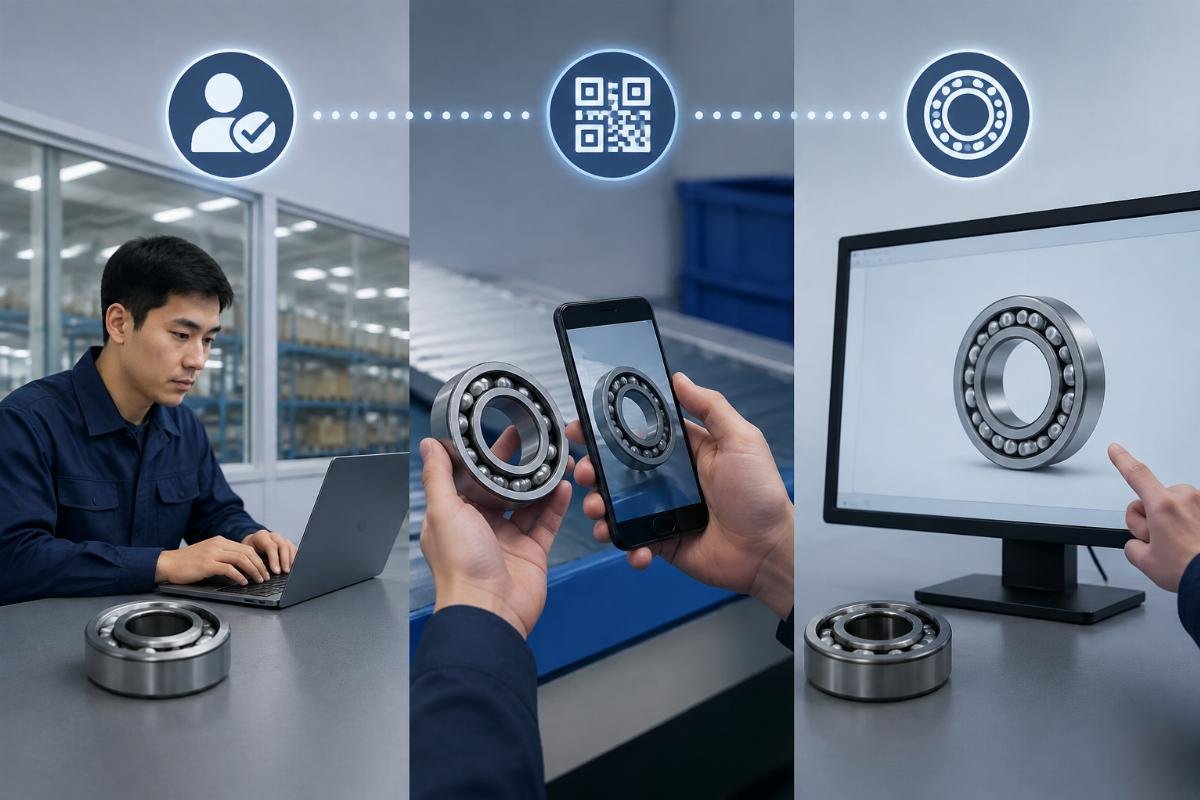
Let me walk you through the verification logic, the anti-counterfeit process, the cross-reference methodology, and the compliance requirements that French industrial buyers need to follow when sourcing from China.
How Do You Verify Authorization Status of a Genuine SKF Supplier for France?
Authorization verification is the first and non-negotiable gate before any transaction begins. Many buyers assume that a supplier claiming to be "authorized" is sufficient. In reality, authorization certificates can be forged, expired, or transferred. The only reliable path is to cross-check the supplier against SKF’s official distributor database, request the original agency certificate with verifiable contact details, and confirm batch-level traceability documents. [NEED_CITE: SKF official authorized distributor verification portal and regional agent listing methodology]
Here is the verification matrix I use when evaluating a supplier:
| Verification Dimension | Authorized Channel | Gray Market Source | Counterfeit Operation |
|---|---|---|---|
| SKF Official Database Listing | Verifiable | Not provided | Not provided |
| Agency Certificate with Batch Traceability | Full batch-level | Sample-level | None |
| Origin Identification (Factory Code) | Controlled | Uncontrolled | Uncontrolled |
| Anti-Counterfeit Support | Robust | Vulnerable | Vulnerable |
| Cross-Reference Technical Support | Full interchange charts | Self-reported | Not provided |
A European distributor once contacted me after importing a full container of deep groove ball bearings (6205 and 6206 series) from a supplier they found through an online marketplace. The packaging looked complete, the labels were printed cleanly, and even the holographic stickers seemed legitimate. But when they scanned the QR codes using the SKF Authenticate app, the serial numbers returned no match. The return and reshipment cycle stretched across weeks, and the downtime cost them far more than the initial price difference. [NEED_CITE: SKF Authenticate app verification process and serial number matching protocol]
The authorization check must include three layers: the official SKF portal listing, the physical agency certificate with verifiable issuer contact, and the batch traceability file that links each shipment to a specific production run. Skipping any of these layers exposes the buyer to significant risk.
What Is the Complete Anti-Counterfeit Validation Process for SKF Bearings?
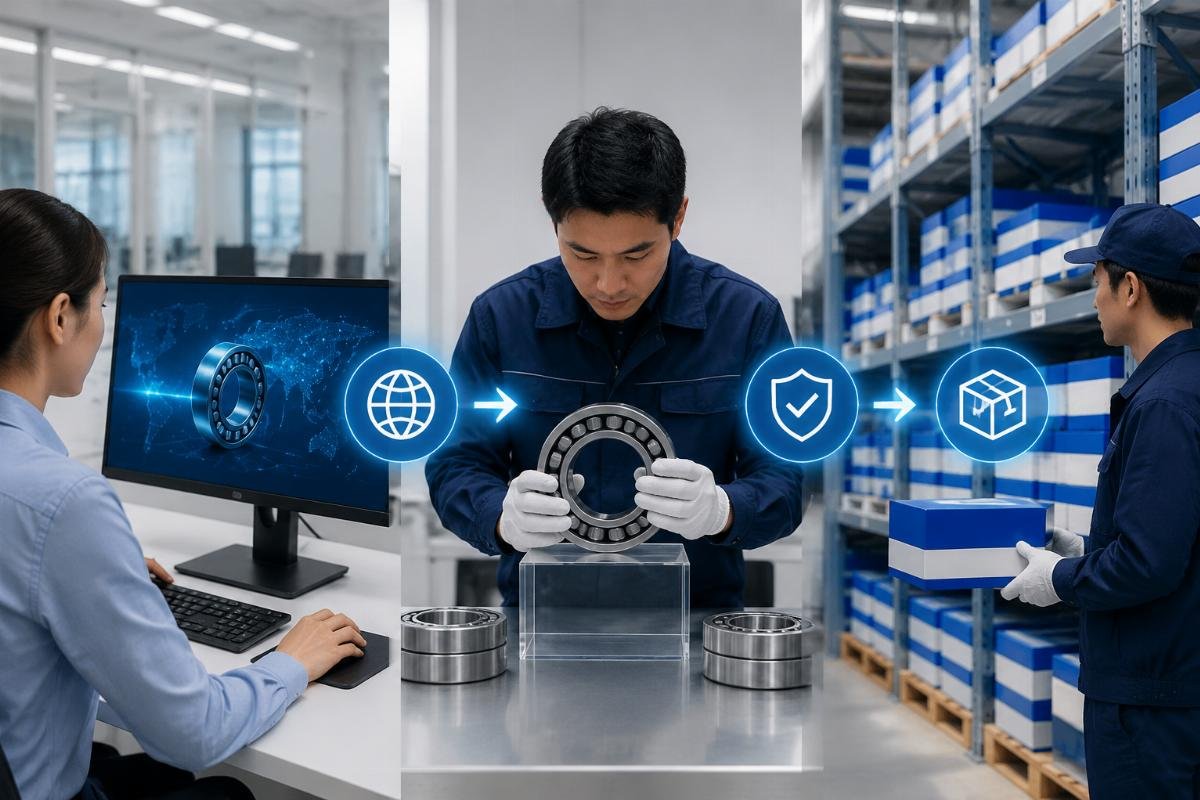
Packaging integrity alone is no longer a reliable indicator of authenticity. Counterfeit operations have advanced to the point where they can replicate holographic labels, QR codes, and even packaging materials with high fidelity. The only dependable approach is a three-step validation process that combines physical inspection, digital verification, and batch-level traceability. [NEED_CITE: SKF anti-counterfeit guidelines and packaging replication risk assessment]
The validation process follows this sequence:
-
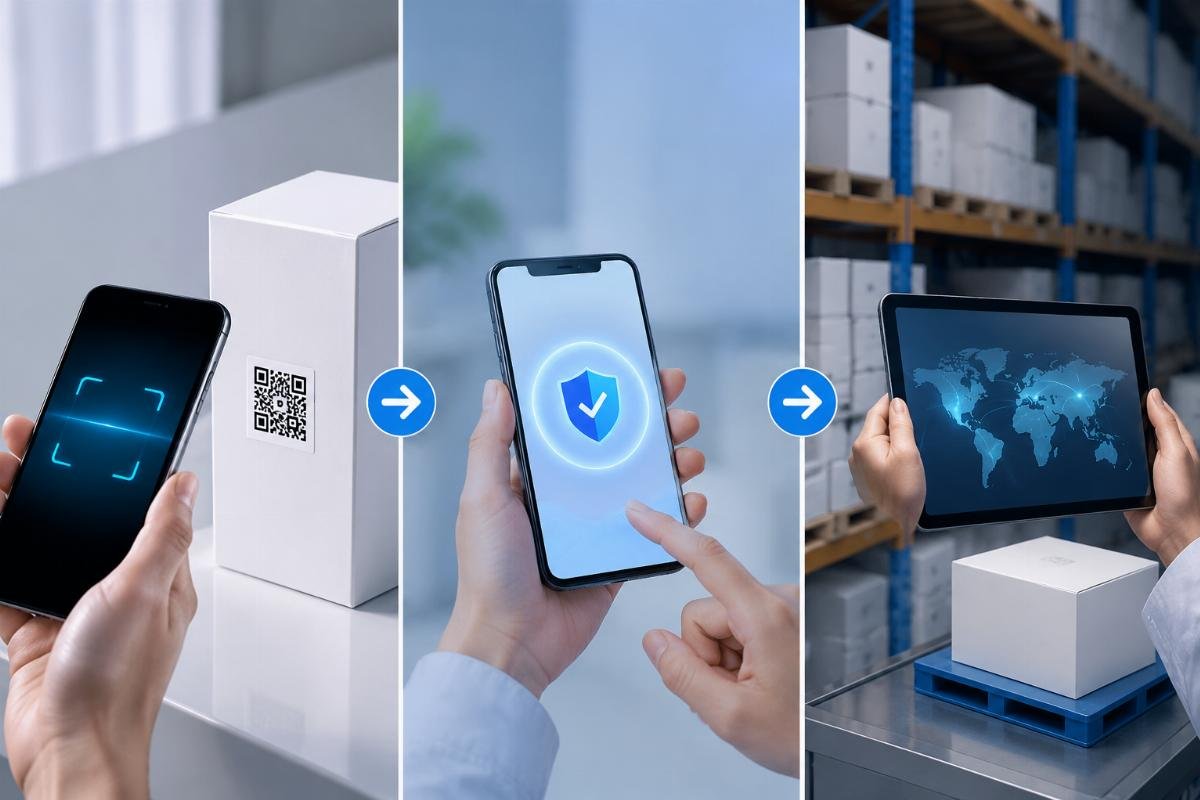
Packaging QR Code Scan: Every genuine SKF bearing package carries a unique QR code. Scanning this code through the SKF Authenticate app should return a match with the product model, batch number, and manufacturing origin. If the scan fails or returns inconsistent data, the unit is suspect.
-
SKF Authenticate App Serial Number Matching: The app cross-references the scanned QR code against SKF’s internal production database. A genuine unit will display matching serial numbers, production date, and factory origin. A mismatch or "not found" result indicates a high probability of counterfeit.
-
Batch Number Traceability Verification: The batch number printed on the bearing outer ring and the packaging must match. Requesting the batch traceability document from the supplier allows the buyer to confirm the production facility, the quality inspection records, and the shipment chain. [NEED_CITE: SKF batch traceability documentation requirements and factory code identification system]
A Middle East steel mill operator once received a shipment of tapered roller bearings (32218 series) that passed visual inspection. The packaging was intact, the labels were clean, and the bearings looked correct. But during installation, the mechanics noticed unusual noise from the hub assembly within weeks. The return rate climbed noticeably, and subsequent investigation revealed that the internal clearance and heat treatment of the rollers were inconsistent with genuine SKF specifications. The root cause was traced back to a supplier who had sourced from a gray market channel without batch-level verification.
The three-step validation must be performed on every shipment, not just on sample units. Counterfeit batches are often mixed with genuine units to pass spot checks. [NEED_CITE: counterfeit bearing mixing strategies and inspection bypass methods documented in industry reports]
How Do You Perform Cross-Reference Selection Between SKF, NSK, FAG, and Other Brands?
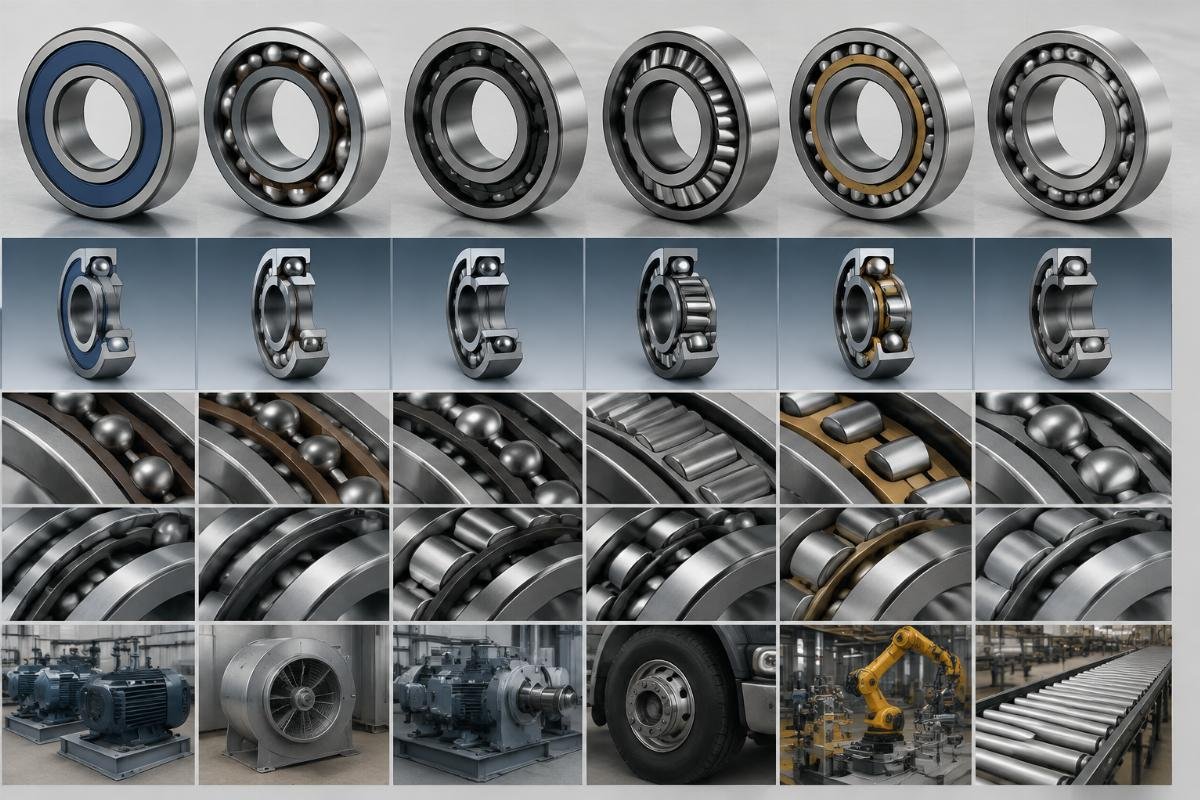
Model number equivalence does not guarantee functional interchangeability. Many buyers assume that if two bearings share the same external dimensions, they can be swapped without consequence. In reality, internal clearance, cage material, seal type, and heat treatment processes vary significantly between brands. A cross-reference comparison must go beyond dimensional matching and address the technical parameters that affect performance in specific applications. [NEED_CITE: cross-brand bearing interchange technical parameters including internal clearance, cage material, and seal type comparison]
Here is the cross-reference matrix I use when matching SKF bearings with NSK, FAG, TIMKEN, NTN, and KOYO equivalents:
| Technical Parameter | SKF Reference | NSK Equivalent | FAG Equivalent |
|---|---|---|---|
| Internal Clearance Class | C3 (standard for industrial) | C3 (matched) | C3 (matched) |
| Cage Material | Pressed steel / machined brass | Pressed steel / machined brass | Pressed steel / polyamide |
| Seal Type | 2RS / ZZ / Open | 2RS / ZZ / Open | 2RS / ZZ / Open |
| Heat Treatment Process | Controlled carbon infusion | Controlled carbon infusion | Controlled carbon infusion |
| Precision Grade | P0 / P6 / P5 | P0 / P6 / P5 | P0 / P6 / P5 |
An automotive repair shop in France once replaced tapered roller bearings (32218 series) on a fleet of commercial vehicles using a brand they assumed was interchangeable based on external dimensions. Within months, the return rate on hub noise complaints climbed noticeably. The investigation revealed that the replacement brand had different internal clearance tolerances and cage material specifications, which caused premature wear under the operating conditions of those vehicles. [NEED_CITE: cross-brand interchange failure cases due to internal clearance and cage material mismatch]
The cross-reference process must include verification of internal clearance class, cage material compatibility, seal type requirements, and precision grade alignment. Simply matching the model number is insufficient for critical applications. I maintain complete interchange charts covering SKF, NSK, FAG, TIMKEN, NTN, and KOYO across all major bearing types, and I walk buyers through the technical comparison before confirming any substitution.
What Are the Compliance and Logistics Requirements for Importing SKF Bearings into France?
Compliance documentation and logistics planning are as critical as product authenticity. French industrial buyers importing bearings from China must navigate customs classification, CE marking requirements, and transit timing to ensure smooth delivery. Misclassification or missing documentation can result in customs delays, penalties, or rejection of the shipment. [NEED_CITE: EU import compliance requirements for industrial bearings including HS code classification and CE marking standards]
The compliance process includes the following elements:
-
HS Code Classification: Bearings must be classified under the correct Harmonized System code for customs clearance. The classification depends on the bearing type (ball, roller, thrust), the application, and the precision grade. Incorrect classification can trigger customs audits and delays.
-
CE Marking and Declaration of Conformity: Industrial bearings imported into the EU must comply with applicable directives. The supplier must provide a Declaration of Conformity and, where required, CE marking documentation. [NEED_CITE: EU machinery directive compliance requirements for bearing imports]
-
Transit Timing and Port Selection: Shipping from Qingdao port to Marseille typically takes a standard transit window. Buyers should plan for customs clearance time and factor in potential delays during peak seasons.
A French MRO buyer once received a shipment of spherical roller bearings (22320 series) that was held at customs for weeks due to incorrect HS code classification. The supplier had used a generic code that did not match the specific bearing type, triggering a customs audit. The delay caused production downtime that cost far more than the original order value. [NEED_CITE: customs classification errors and delay impact on industrial bearing imports]
The compliance documentation must be prepared before shipment, not after. I work with buyers to ensure that all HS codes, CE declarations, and batch traceability documents are aligned with French customs requirements before the goods leave the warehouse.
Conclusion
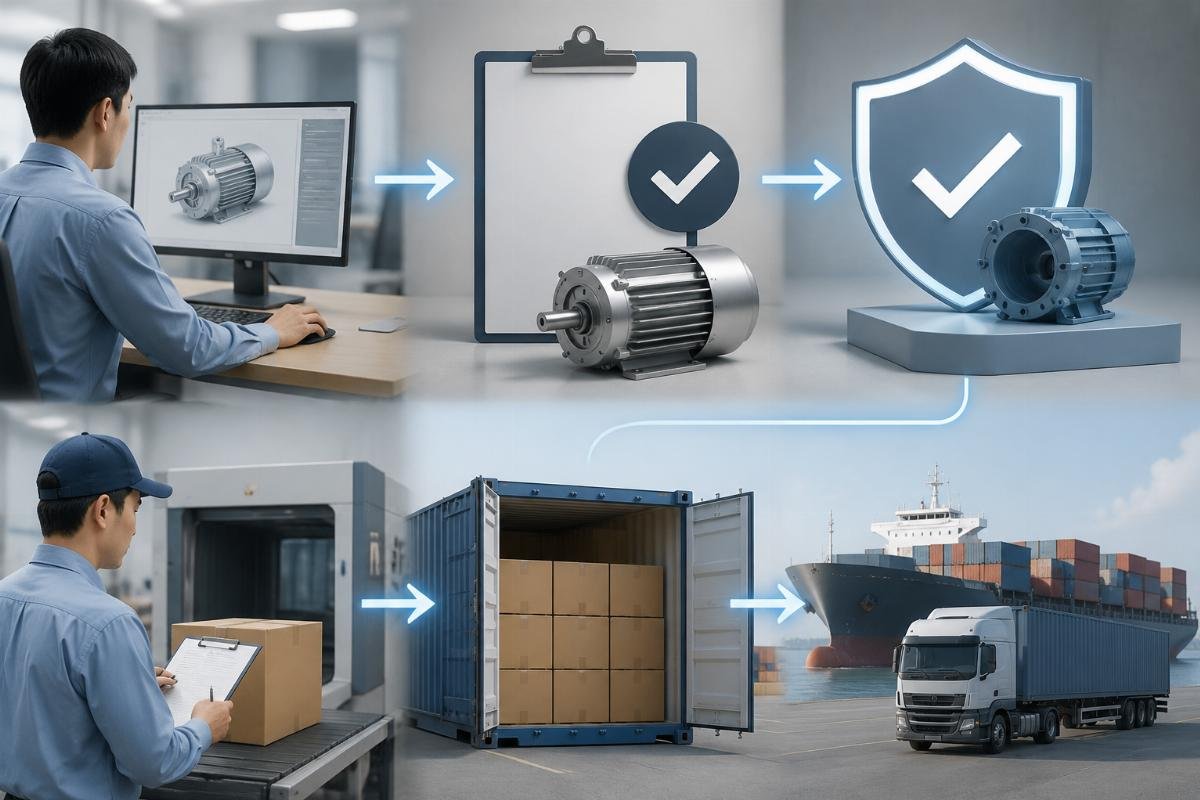
Authenticity verification, cross-reference accuracy, and compliance documentation are the three pillars of successful SKF bearing procurement from China. Buyers who skip authorization checks, rely on packaging alone, or assume dimensional equivalence guarantees functional interchange will inevitably face costly failures. The verification process must be systematic, the cross-reference must be technical, and the compliance must be proactive.
Leave a Reply