
KOYO Cross Reference Guide: Complete Interchange Wholesale Supplier
Matching a KOYO bearing to an SKF, NSK, FAG, TIMKEN, or NTN equivalent is never just about copying the basic model number. A KOYO cross reference guide that only lists basic numbers will send you straight into tolerance mismatch, clearance errors, and premature field failures.
The core answer to any KOYO cross reference search is this: a valid interchange requires a four-layer check—basic model, boundary dimensions, radial internal clearance class, and suffix meaning—across all six brands before a replacement can be considered safe. Skipping any layer is the single most common reason machinery rebuilt with "equivalent" bearings fails within weeks.
I still remember a call from a Middle East plastics plant that had shut down an entire injection molding line. The maintenance team had ordered what they thought was a direct KOYO cross reference for a tapered roller bearing originally specified by another brand. The basic numbers matched, the outer diameter looked right, but the inner ring bore was off by a couple of tenths of a millimeter. The shaft fit was loose, the bearing walked under load, and the line sat idle for days while scrap material piled up into a mid-six-figure loss. That kind of failure is not rare—it is the textbook outcome of using a KOYO cross reference guide that stops at the first row of the chart. [NEED_CITE: root cause distribution of bearing failures per ISO 15243]
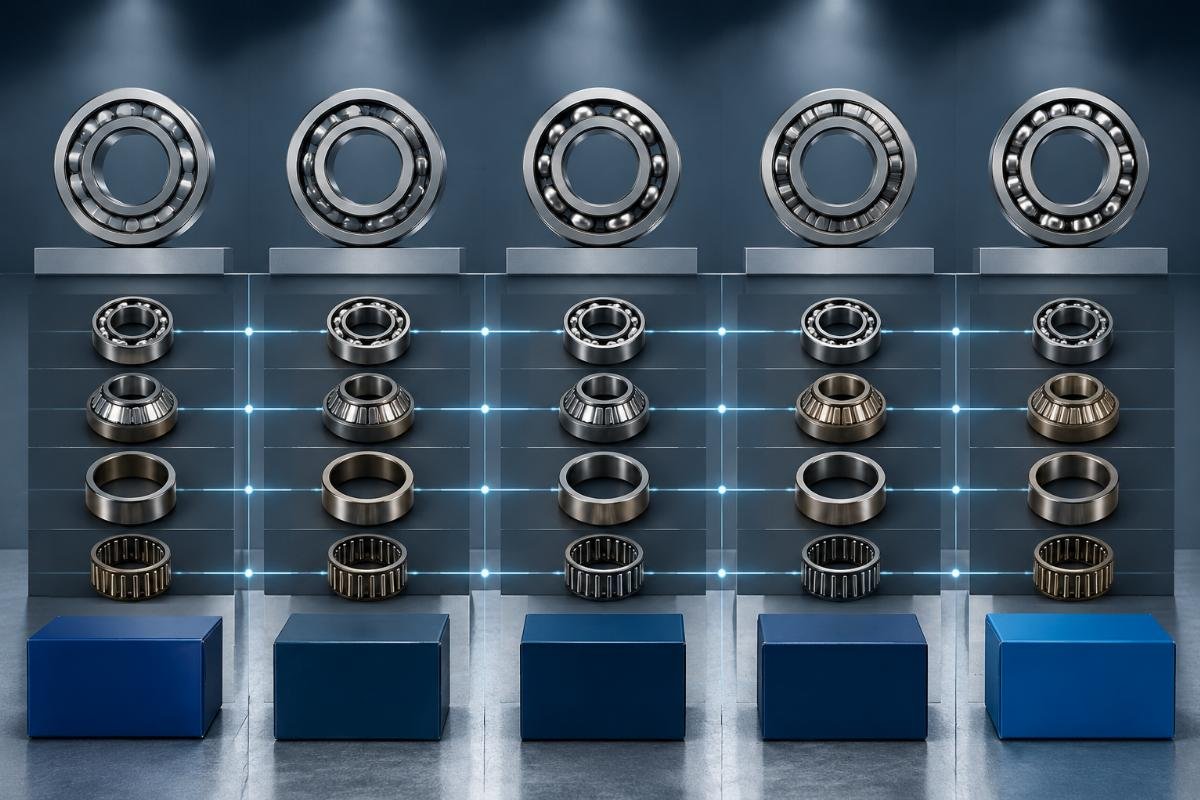
Getting the interchange right is the difference between a routine maintenance swap and a costly re-teardown, which is why the rest of this guide walks through how to actually read a KOYO cross reference chart, where most buyers go wrong, and how to verify that the replacement you receive is genuine.
KOYO to SKF/NSK/FAG/TIMKEN/NTN: How to Read the Interchange Chart
A reliable KOYO cross reference chart must be read in three stacked layers, not as a flat list of model-to-model matches. The first layer is the basic model number, which tells you the bearing type and nominal size. The second layer is the boundary dimensions—bore, outside diameter, and width—verified against ISO 15 and ISO 5753, because even within the same basic model family, different brands can carry legacy dimensional variations. The third layer is the suffix code, which encodes cage material, seal type, clearance class, and precision grade. [NEED_CITE: ISO 15 rolling bearing radial dimensions and ISO 5753 clearance definitions]
When I was running field service for a transmission equipment supplier out of the Yangtze River Delta, I kept a personal matrix covering the six major brands—KOYO, SKF, NSK, FAG, TIMKEN, and NTN—across deep groove ball, tapered roller, spherical roller, cylindrical roller, angular contact, and thrust types. The matrix was not a simple translation table. It was a working document that flagged where a KOYO 6205, for example, would line up with an SKF 6205-2RZ but diverge from a TIMKEN variant because of cage or seal differences. Popular models like 6205, 6206, 6305, 22320, 32218, and 30206 appear in almost every KOYO cross reference request I handle, and the suffix layer is where the real traps hide.
| Layer | What to Check | KOYO Example | SKF Equivalent | Common Pitfall |
|---|---|---|---|---|
| Basic Model | Bearing type and nominal size | 32218 | 32218 | Looks identical, but series can differ |
| Boundary Dimensions | Bore, OD, width per ISO 15 | 90 × 160 × 42.5 | 90 × 160 × 42.5 | Legacy非标 variants exist |
| Clearance Class | C2 / CN / C3 / C4 / C5 | C3 | C3 | CN and C3 are not always equal |
| Suffix Meaning | Cage, seal, precision, heat stabilization | /C3 CA | C3 W33 | Cage material and groove specs differ |
| Precision Grade | P0 / P6 / P5 / P4 | P6 | P6 | P6 tolerance bands vary slightly by brand |
A European wind farm operator once sent me a list of OEM part numbers from a gearbox rebuild, asking for a KOYO cross reference against six brands simultaneously. The list ran into dozens of lines, and each line needed all three layers checked. The basic model matched on paper, but two of the bearings had suffix codes indicating a specific high-temperature cage material on the original brand. The KOYO equivalent with the same basic number used a standard polyamide cage unless a specific suffix was added. Without that suffix check, the replacement would have degraded under operating temperature within months. [NEED_CITE: cage material temperature limits per bearing manufacturer technical documentation]
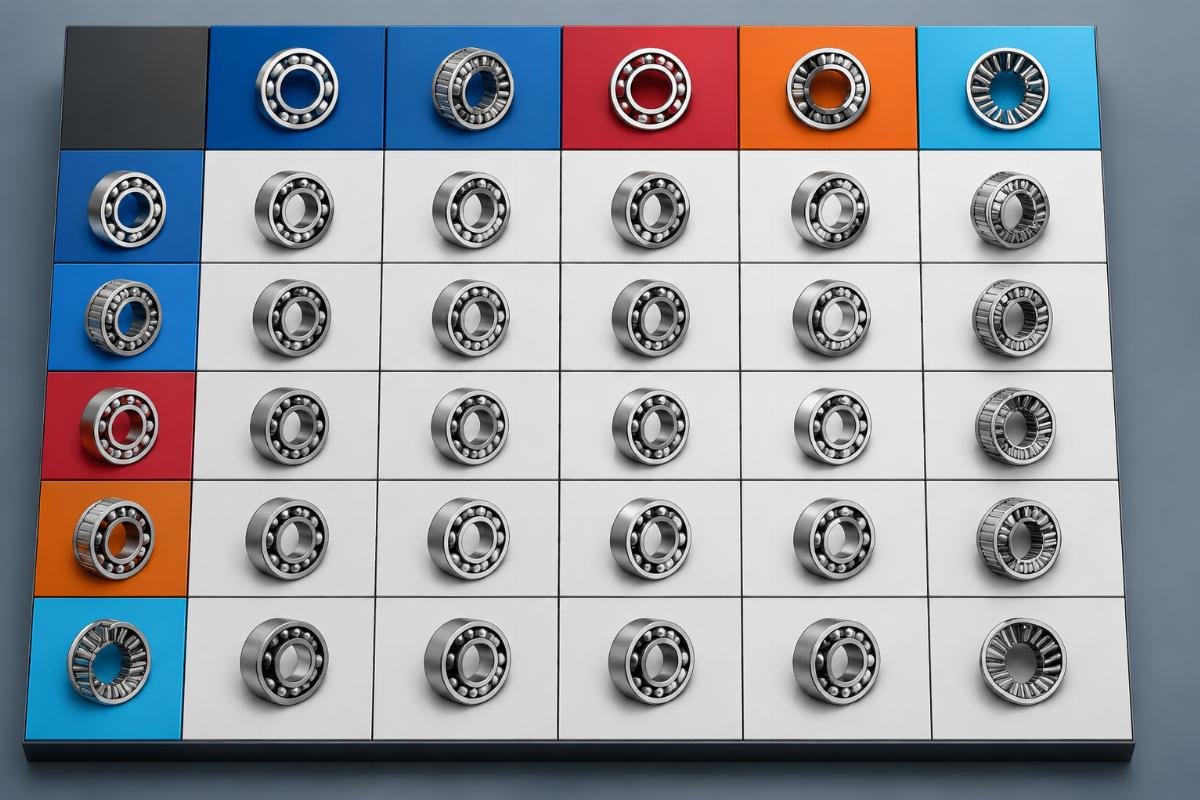
The takeaway is that a KOYO cross reference chart is only as useful as its suffix decoding logic. Any chart that presents only basic model numbers without clearance and suffix columns is incomplete and dangerous to use in production environments.
Common Mistakes When Cross-Referencing KOYO Bearings
The three most frequent errors in KOYO interchange work are ignoring radial clearance grouping, misreading suffix codes, and failing to verify dimensional tolerance bands. Each one looks harmless on a spreadsheet but compounds into field failure once the bearing is pressed onto a shaft.
The clearance mistake is the most widespread. Many buyers assume that a standard CN clearance on one brand is interchangeable with a C3 on another. In reality, CN and C3 overlap but are not identical, and the actual clearance range for a given bore size can shift noticeably between brands. [NEED_CITE: radial internal clearance group definitions per ISO 5753] When a KOYO bearing specified with C3 clearance is swapped for an equivalent from another brand that ships as CN, the operating clearance under thermal expansion can drop below safe limits, leading to preload buildup, overheating, and early spalling.
The suffix misread is equally damaging. KOYO, SKF, NSK, FAG, TIMKEN, and NTN each have their own suffix coding systems for cage type, seal design, lubrication groove, and precision class. A KOYO suffix indicating a machined brass cage does not automatically map to the same suffix position on an NSK or FAG chart. I have seen orders where a buyer matched a KOYO tapered roller bearing to an NTN equivalent, but the cage suffix was left blank on the NTN side, defaulting to a pressed steel cage that could not handle the shock load in a mining conveyor application.
| Mistake Type | Wrong Approach | Correct Approach | Risk if Ignored |
|---|---|---|---|
| Clearance Ignored | Assume CN equals C3 | Match actual clearance group per ISO 5753 | Preload buildup, overheating |
| Suffix Misread | Copy suffix position directly | Decode each brand’s suffix table separately | Cage failure, lubrication loss |
| Tolerance Unverified | Trust basic model only | Confirm bore and OD tolerance band | Loose fit, shaft damage |
A Latin American steel mill once returned a full order of what they believed were genuine KOYO equivalents for a continuous caster line. The bearings had been sourced through a third-party trader who provided a KOYO cross reference based on basic model numbers alone. The clearance class was wrong, the cage material was downgraded, and the batch markings did not match KOYO’s standard country-of-origin format. The mill lost extended production time and had to reorder from a verified channel. [NEED_CITE: bearing counterfeit detection methods per industry association guidelines]
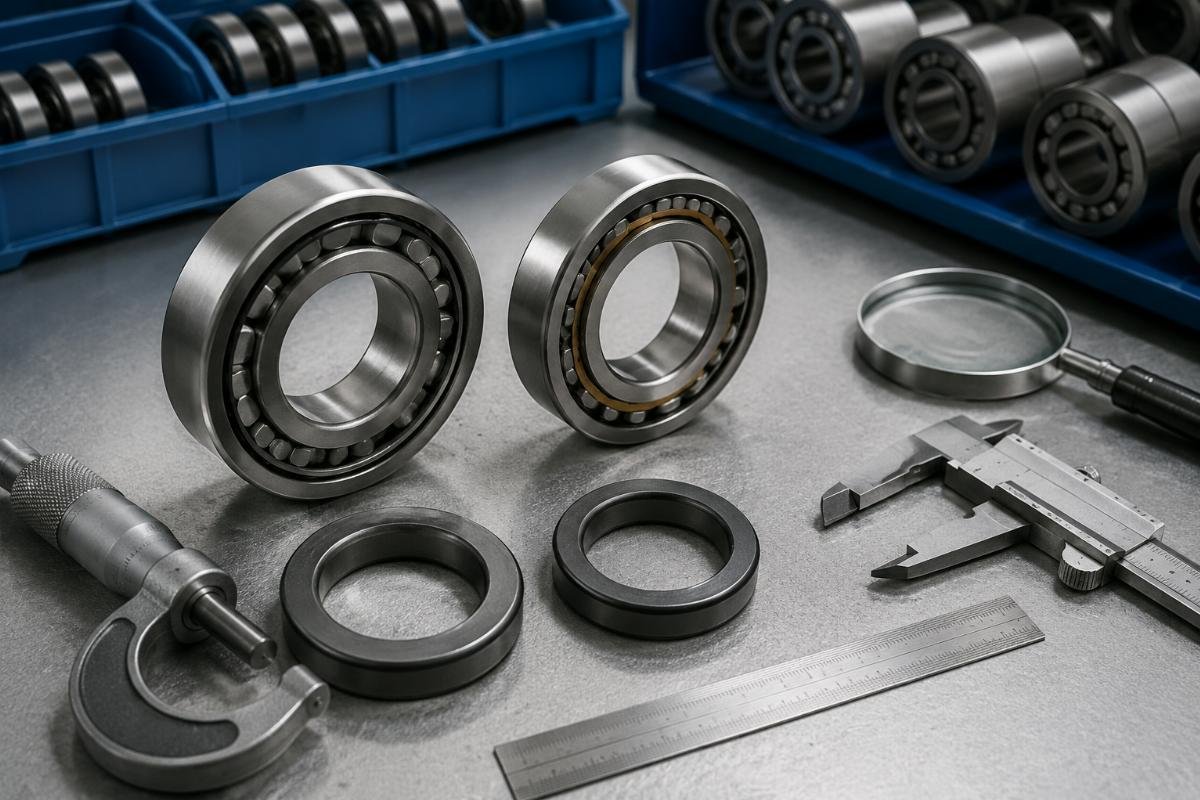
The pattern across these cases is the same: the KOYO cross reference guide used was treated as a simple lookup table rather than a multi-parameter verification tool. Treating it correctly is non-negotiable for any buyer who cannot afford unplanned downtime.
How to Verify Genuine KOYO or Equivalent Bearings After Interchange
Once a KOYO cross reference has been completed and the replacement bearing is selected, the next mandatory step is authenticity verification before installation. The interchange market is heavily targeted by counterfeiters, and a bearing that carries the right model number and suffix but comes from an unverified source can still destroy a machine.
Verification starts with country-of-origin identification. KOYO, like other major brands, stamps specific batch and origin markings on the bearing ring and packaging. These markings follow a defined format that can be cross-checked against the manufacturer’s official documentation. A bearing whose markings do not match the expected format—wrong font, inconsistent depth, missing batch traceability—is an immediate red flag, regardless of how convincing the packaging looks. [NEED_CITE: bearing anti-counterfeit verification standards per manufacturer technical bulletins]
The second layer is channel verification. A genuine KOYO cross reference replacement should be traceable to an authorized distributor or a tier-one dealer in the supply chain. When I source interchange bearings for overseas clients, I require documentation that links the batch number on the bearing to the original manufacturer’s shipment record. This is not a luxury—it is the only way to confirm that the bearing was not repackaged, relabeled, or mixed with counterfeit stock during transit.
| Verification Layer | What to Check | Acceptable Evidence | Red Flag |
|---|---|---|---|
| Country of Origin | Ring and box markings | Matches manufacturer format | Inconsistent font or missing batch |
| Channel Traceability | Distributor authorization | Authorized dealer certificate | Unverifiable third-party source |
| Physical Inspection | Surface finish, engraving depth | Consistent with genuine sample | Shallow engraving, rough edges |
| Documentation | Test reports, packing list | Batch-linked to manufacturer | Generic or missing documents |
A Central Asian equipment repair shop once brought me a set of bearings they had purchased online for a gear reducer rebuild. The model numbers matched a KOYO cross reference I had prepared, but the engraving on the inner ring was noticeably shallower than on a known genuine sample, and the packaging lacked the standard QR traceability code. Lab testing later confirmed the steel composition was outside the expected range for the grade. The shop avoided a catastrophic field failure only because they paused for verification before pressing the bearings into housings. [NEED_CITE: bearing steel composition standards per ISO 683-17]

The discipline of verification must be applied to every brand in the interchange—SKF, NSK, FAG, TIMKEN, NTN—because counterfeiters do not discriminate by brand. A KOYO cross reference guide that does not include a verification protocol is incomplete.
Where to Get Accurate KOYO Cross Reference Support
Relying on fragmented online tables for a KOYO cross reference is the fastest path to the mistakes described above. What most buyers actually need is a complete interchange service that covers all six major brands, includes suffix decoding, and ties the matched bearing to a verifiable supply channel.
This is where a specialized bearing supplier with cross-brand expertise becomes essential. The right partner does not just hand over a chart—they walk through the application, confirm the operating conditions, check the clearance and suffix requirements, and then source the matched bearing from an authorized channel with full batch traceability. For buyers managing maintenance across multiple brands, this eliminates the need to maintain separate interchange matrices internally and reduces the risk of suffix-related errors to near zero.
I now handle KOYO cross reference requests for industrial buyers, distributors, and maintenance operations across multiple regions. The work covers deep groove ball bearings, tapered roller bearings, angular contact bearings, cylindrical roller bearings, spherical roller bearings, and thrust bearings, with popular models like 6205, 6206, 6305, 22320, 32218, and 30206 appearing in nearly every request. The service includes authenticity verification guidance, country-of-origin identification, and complete interchange across KOYO, SKF, NSK, FAG, TIMKEN, and NTN. [NEED_CITE: authorized bearing distributor verification practices per industry association standards]
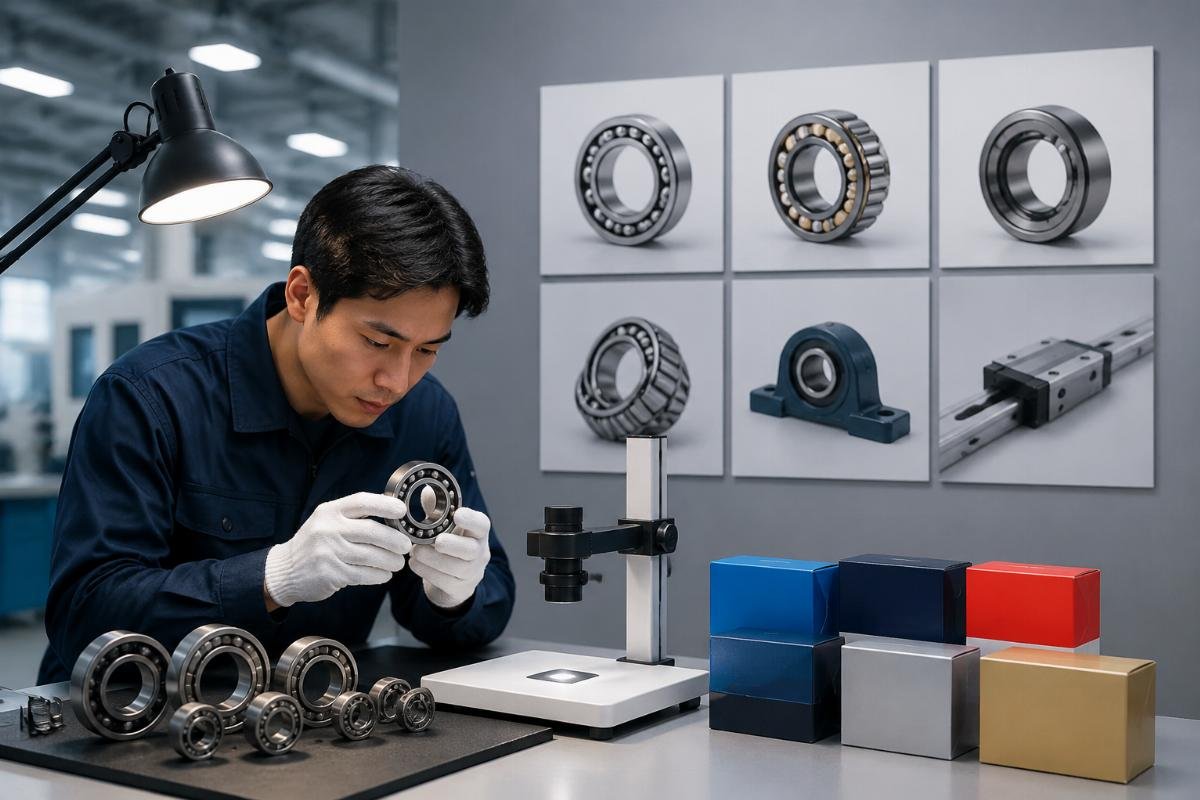
The difference between a self-assembled internet chart and a professional KOYO cross reference service is not just convenience—it is the gap between a bearing that survives its intended service life and one that fails before the first maintenance interval.
Conclusion
A KOYO cross reference guide that stops at basic model numbers is a liability, not a tool. Correct interchange requires layered verification of dimensions, clearance, suffix codes, and authenticity across all six major brands, supported by traceable sourcing from authorized channels.
Leave a Reply