
SKF Bearing Wholesale Supplier in UAE: Authorized Cross-Reference Guide
Most buyers assume a lower-priced SKF bearing is a seasonal promotion. The real reason is almost always unauthorized channel diversion or outright counterfeits.
To source genuine SKF bearings in the UAE, always verify the supplier’s authorization chain against SKF’s official distributor list, request a verifiable certificate of origin for every shipment, and use brand cross-reference tables only after confirming dimensional and performance compatibility under your actual operating conditions.
I still remember a shipment of SKF 22320 spherical roller bearings that arrived at Jebel Ali port with blurred packaging stamps and shallow inner-ring engraving. The local quality inspector flagged the entire batch immediately. The buyer, a procurement manager at a Dubai-based industrial trading firm, had sourced the lot through a secondary trader in Dragon Mart rather than a verified SKF bearing wholesale supplier in UAE. The delay cost him a mid-six-figure loss in demurrage and replacement sourcing. That incident reinforced a principle I apply to every order I handle: in a market as dense with re-export trade as the UAE, authorization chain verification is not optional—it is the baseline. [NEED_CITE: SKF official distributor verification portal and authorization certificate requirements]

Let me walk you through the practical framework I use daily to separate genuine sourcing from risky shortcuts.
What Are the Counterfeit Risks When Buying SKF Bearings in the UAE?
The UAE’s position as a global re-export hub creates an environment where unauthorized SKF bearings circulate freely through secondary and tertiary trading channels.
The Jebel Ali Free Zone handles millions of tons of cargo annually, and a significant portion of industrial components pass through without end-user verification. [NEED_CITE: Jebel Ali Free Zone industrial cargo throughput and re-export characteristics] Counterfeit SKF bearings enter the market through several routes: diverted stock from other regions with weaker distribution controls, repackaged used bearings sold as new, and outright manufactured fakes with near-identical packaging.
A steel mill operator in the broader Middle East region once received a full order of SKF deep groove ball bearings that passed visual inspection at the warehouse but failed within weeks under high-temperature continuous operation. The inner rings showed abnormal wear patterns consistent with substandard heat treatment. Upon investigation, the batch had been rerouted through an unauthorized intermediary who could not provide a traceable certificate of origin.
The most common red flags I check on every incoming shipment include:
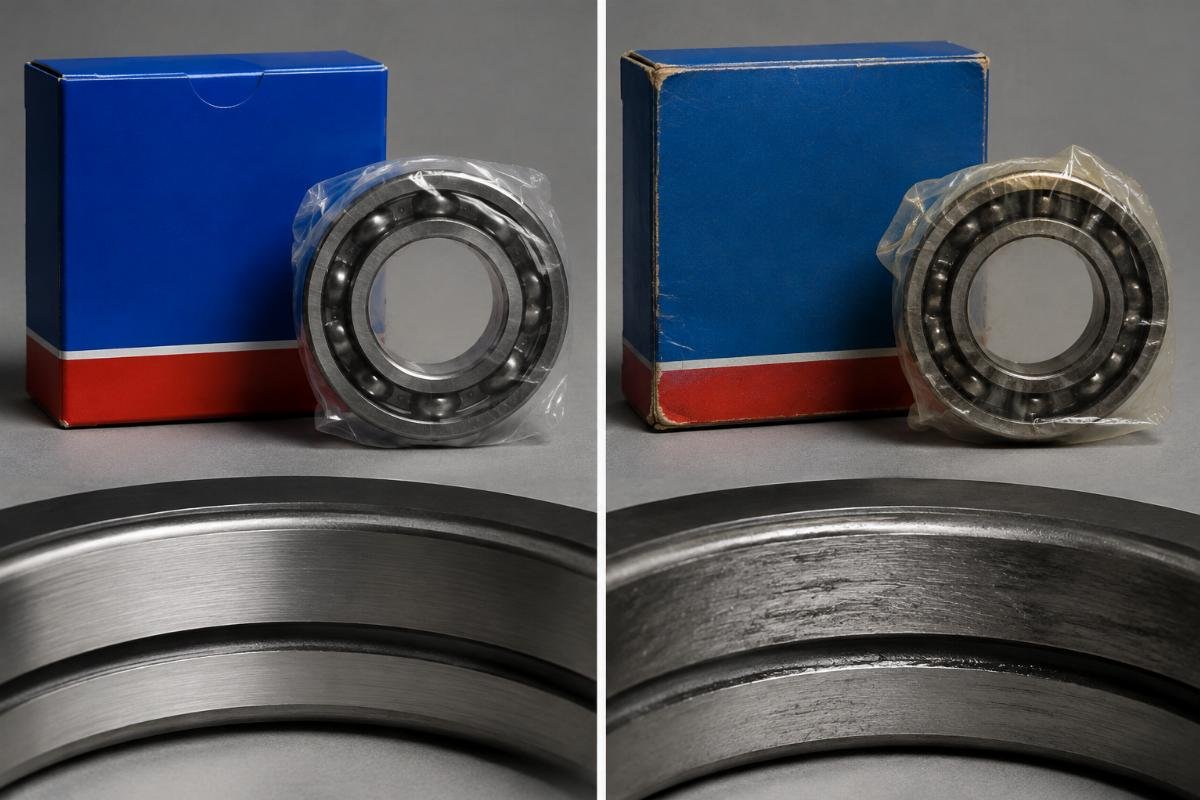
- Packaging quality: Genuine SKF packaging uses precise laser printing with consistent font depth. Counterfeit boxes often show slight color shifts or blurred batch numbers.
- Inner-ring engraving: Authentic SKF bearings have deep, clean laser-etched markings on the inner ring. Shallow or mechanically stamped markings are a strong warning sign.
- Grease condition: Genuine SKF bearings are filled with factory-specification grease that has a distinct consistency and color. Off-spec grease is a frequent indicator of repackaged or refilled units.
- Price deviation: If the quoted price is substantially below the prevailing market range from authorized channels, the sourcing path almost certainly bypasses SKF’s controlled distribution network.
How Do You Confirm a Supplier Is an Authorized SKF Distributor?
You confirm authorization by cross-checking the supplier against SKF’s official distributor directory, requesting a current authorization certificate with verifiable contact details, and validating the certificate of origin for each shipment batch.
SKF maintains a publicly accessible distributor locator tool on its official website. [NEED_CITE: SKF official distributor locator tool and verification process] However, in the UAE market, some traders display expired certificates or certificates issued to affiliated but legally separate entities. I always insist on three layers of verification before committing to any SKF bearing wholesale supplier in UAE:
First layer: Official directory match. The supplier’s registered business name and address must appear exactly as listed in SKF’s current authorized distributor database. Even minor discrepancies—such as a different trade name or a branch office address not listed—require further clarification.
Second layer: Authorization certificate validation. The certificate must be issued directly by SKF or its regional headquarters, include a valid date range, and bear verifiable contact information for the issuing authority. I have seen certificates that looked authentic but were issued by a defunct regional office or had been digitally altered.
Third layer: Shipment-level documentation. Every batch must be accompanied by a certificate of origin that traces back to an SKF manufacturing facility. The certificate should include batch numbers, manufacturing dates, and the specific SKF plant of origin. [NEED_CITE: SKF certificate of origin requirements and batch traceability standards]
A distributor in the Gulf region once presented what appeared to be a valid SKF authorization certificate. Upon contacting SKF’s regional compliance office, we discovered the certificate had been issued to a different legal entity that had since been dissolved. The trader was operating without current authorization. This kind of due diligence is why I treat authorization verification as a non-negotiable step, not a formality.

How Do You Cross-Reference SKF Bearings with Other Brands?
You cross-reference SKF bearings with NSK, FAG, TIMKEN, NTN, and KOYO by using verified interchange tables that confirm dimensional equivalence, internal geometry compatibility, and performance rating alignment under your specific operating conditions.
Cross-referencing is one of the most requested services I handle, particularly from maintenance teams replacing bearings in legacy equipment where the original brand is no longer readily available. However, cross-referencing is not a simple model-number swap. A bearing that matches dimensionally may differ in internal geometry, cage design, or load rating—and those differences can lead to premature failure if not properly evaluated.
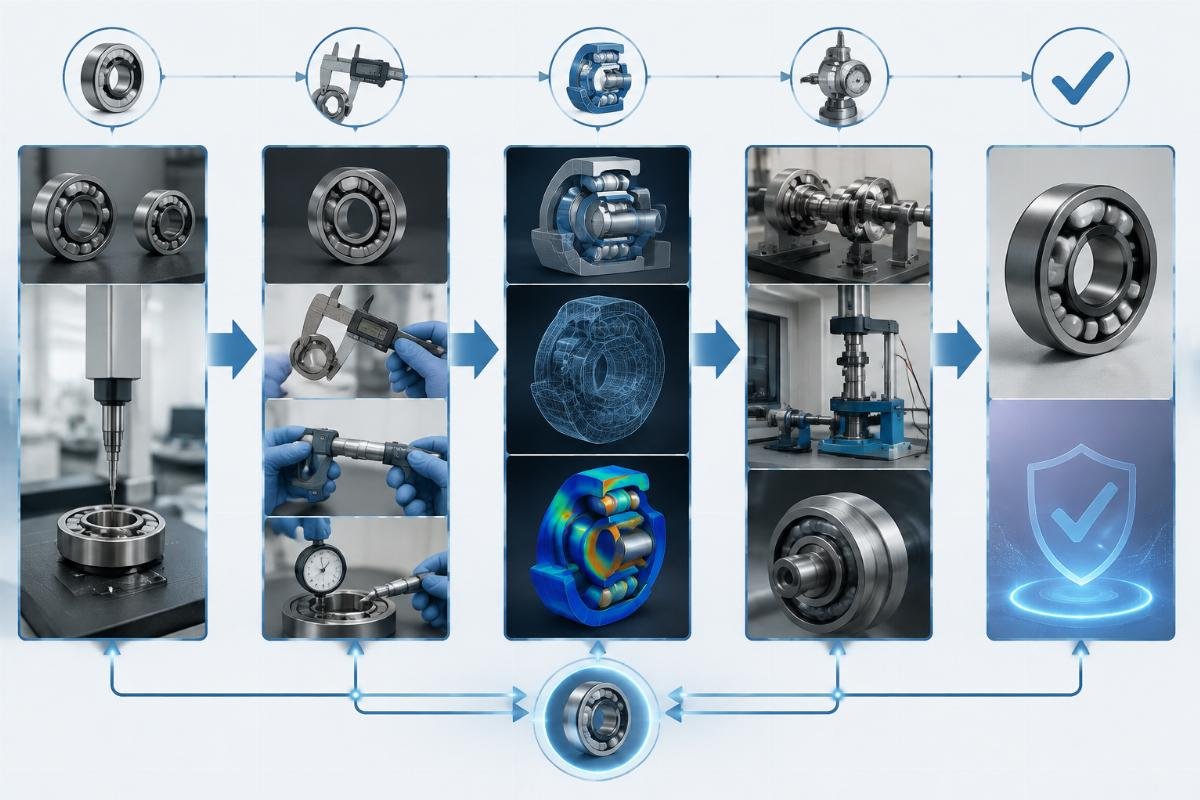
The cross-reference process I follow involves three verification stages:
Dimensional verification. The bore diameter, outer diameter, and width must match exactly. Even minor deviations in these dimensions can affect shaft fit, housing alignment, and preload conditions. [NEED_CITE: ISO 15 bearing dimensional standards and tolerance classes]
Internal geometry assessment. The number and size of rolling elements, the contact angle, the cage type, and the raceway curvature must be compatible with the application’s load profile and speed requirements. A spherical roller bearing with a different roller count may fit the same housing but distribute loads differently, affecting fatigue life.
Performance rating alignment. The dynamic and static load ratings, the limiting speed, and the fatigue load limit must meet or exceed the requirements of the original specification. [NEED_CITE: ISO 281 bearing life calculation and load rating standards]
An industrial maintenance team at a cement plant in the region needed to replace a batch of FAG spherical roller bearings that had become difficult to source. They requested a cross-reference to SKF equivalents. The dimensional match was straightforward, but the operating conditions included high shock loads and elevated temperatures. After reviewing the internal geometry and load ratings, we identified an SKF variant with a reinforced cage design and higher-temperature grease specification that better matched the actual service conditions than a direct dimensional equivalent would have.
| Verification Stage | Dimensional Match | Internal Geometry | Performance Rating |
|---|---|---|---|
| SKF ↔ NSK | Required exact match | Assessed for load distribution | Compared dynamic and static load ratings |
| SKF ↔ FAG | Required exact match | Evaluated cage and roller design | Verified fatigue load limit compatibility |
| SKF ↔ TIMKEN | Required exact match | Checked contact angle alignment | Confirmed limiting speed under operating conditions |
| SKF ↔ NTN | Required exact match | Reviewed raceway curvature | Aligned life calculation parameters |
| SKF ↔ KOYO | Required exact match | Assessed rolling element count | Verified application-specific load capacity |
What Documents Do You Need to Guarantee Bearing Authenticity?
You need a certificate of origin traceable to the SKF manufacturing facility, an authorization chain document linking the supplier to SKF’s official distribution network, and a quality inspection report confirming batch-level compliance with SKF specifications.
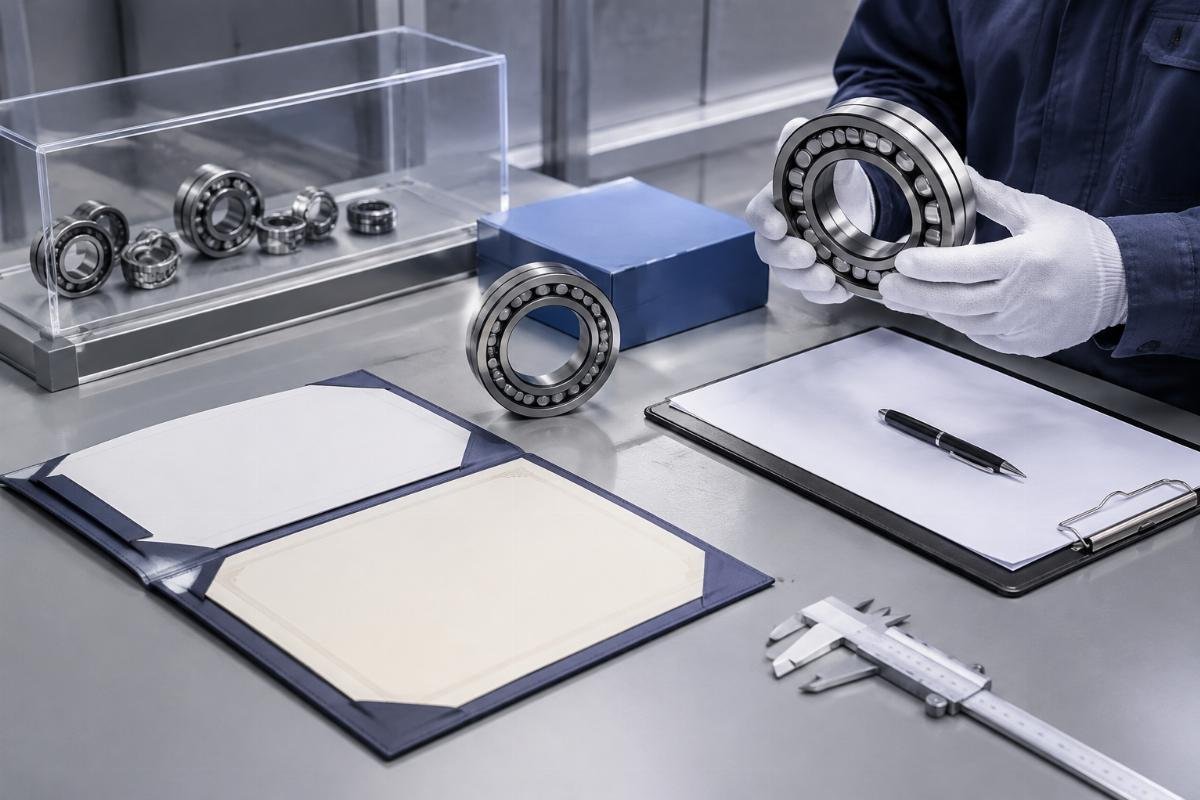
Documentation is the backbone of authenticity assurance. In my experience, suppliers who hesitate to provide complete documentation are almost always operating outside SKF’s authorized channel. I require three core documents for every SKF bearing wholesale supplier in UAE engagement:
Certificate of origin. This document must identify the specific SKF manufacturing plant, the batch number, the manufacturing date, and the destination market. It serves as the primary traceability link between the bearing and SKF’s production records. [NEED_CITE: SKF manufacturing traceability and certificate of origin standards]
Authorization chain documentation. This includes the supplier’s current SKF authorization certificate, any sub-distribution agreements, and proof that the bearing has remained within SKF’s controlled distribution network from the factory to the point of sale. Gaps in the authorization chain are a common indicator of diverted or counterfeit stock.
Quality inspection report. A batch-level inspection report should confirm that the bearings meet SKF’s dimensional, material, and performance specifications. This report is particularly important for large orders or critical applications where failure consequences are severe.
A power generation operator in the region once received a shipment of SKF bearings without a certificate of origin. The supplier claimed the documents were "in process." Upon independent inspection, several bearings showed signs of repackaging, and the grease specification did not match SKF’s factory standard. The entire batch was rejected, and the supplier was unable to provide the required traceability documentation.
Conclusion
Authorization verification, cross-reference discipline, and documentation rigor are the three pillars of genuine SKF bearing procurement in the UAE market. In a re-export environment where unauthorized channels thrive, buyers who invest in systematic verification avoid the far greater costs of counterfeit failures, shipment delays, and equipment downtime.
Leave a Reply